
Ninth Circuit: Likelihood of Confusion Required to Sustain TM Counterfeiting Claim
October 28, 2020
Authored and Edited by Morgan E. Smith; Margaret A. Esquenet
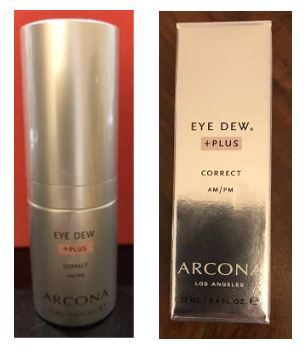
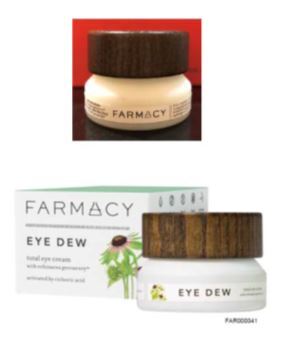
Arcona Inc. and Farmacy Beauty, LLC both sell beauty and skincare products, including eye creams. Both companies use the mark EYE DEW for their respective eye creams. Arcona sells its EYE DEW products primarily at Nordstrom in the U.S., and at Sephora in Australia and Asia. Arcona’s EYE DEW eye cream comes in a tall, cylindrical, silver bottle, which comes in a slim, rectangular outer box. In 2015, Farmacy Beauty began selling its EYE DEW products at Sephora in the U.S. Farmacy Beauty’s EYE DEW eye cream comes in a short, wide, white jar, which comes in a square outer box.
|
Arcona’s Product |
Farmacy Beauty’s Product |
|
|
|
In August 2016, Arcona sent Farmacy a demand letter that Farmacy stop selling its EYE DEW product. After the parties unsuccessfully tried to resolve the matter, Arcona brought suit in September 2017 alleging trademark counterfeiting; trademark infringement; and unfair competition under the Lanham Act, California state law, and California common law. At Arcona’s request, the trademark infringement and unfair competition claims were dismissed with prejudice, and the trademark counterfeiting claim proceeded.
In March 2019, the district court granted partial summary judgment in Farmacy’s favor on the trademark counterfeiting claim, noting that the parties disputed only the law, not the material facts. Arcona argued that the court should focus only on the EYE DEW mark, not the products and product packaging as a whole. The district court disagreed and instead analyzed the products in their entireties, concluding that “no reasonable jury could find” that Farmacy’s EYE DEW product was a counterfeit of Arcona’s EYE DEW product. The Ninth Circuit affirmed.
The Ninth Circuit first addressed Arcona’s argument that it was not required to show a likelihood of confusion for its trademark counterfeiting claim. The Ninth Circuit noted that, while it had not yet “expressly held that a counterfeiting claim requires a likelihood of confusion,” the plain language of the Lanham Act requires it:
“[a]ny person who . . . use[s] in commerce any reproduction, counterfeit, copy, or colorable imitation of a registered mark . . . which such use is likely to cause confusion, or to cause mistake, or to deceive . . . shall be liable in a civil action by the registration for the remedies hereinafter provided.”
15 U.S.C. § 1114(1)(a) (emphases added).
Arcona argued that, because other sections of the Lanham Act that provide remedies for counterfeiting—ex parte seizure of counterfeit goods and assets (15 U.S.C. § 1116) and statutory and treble damages (15 U.S.C. § 1117)—do not mention “likelihood of confusion,” a counterfeiting claim does not require such a showing. The Court rejected this argument, noting that the sections Arcona pointed to both refer to 15 U.S.C. § 1114, which includes a likelihood of confusion requirement. The Court also noted that a counterfeiting claim is “the ‘hard core’ or ‘first degree’ of trademark infringement,” and nothing in Section 1114 “suggests that a counterfeiting claim should be construed differently from an infringement claim” with respect to a likelihood of confusion requirement. Citing prior decisions in the Second and Fifth Circuits, the Court held that the plain language of the Lanham Act requires a likelihood of confusion for a trademark counterfeiting claims.
The Court then declined to presume consumer confusion given the overall differences between the products—apart from the name EYE DEW, the companies’ products look nothing alike and have different shapes, design schemes, text, and colors.
Finally, the Court concluded there was no genuine dispute of material fact about the lack of likelihood of consumer confusion. The Ninth Circuit agreed that the district court properly analyzed the products as a whole, noting that “[a] court should not myopically focus on only the alleged counterfeit marks to the exclusion of the entire product or even common sense.” After recounting the various differences between the parties’ products, the Court also discussed third-party use of EYE DEW in the beauty industry (underscoring that the mark is “not so unique or strong”) and determined there was no evidence that Farmacy’s use of EYE DEW was intentional or willful. In fact, the Court observed that Farmacy’s “dissimilar packaging and rampant use of its housemark ‘flatly belie[s] any such notion.’”
The case is Arcona, Inc. v. Farmacy Beauty, LLC, No. 19-55586, 2020 WL 5834748 (9th Cir. Oct. 1, 2020).
Related Practices
Related Industries
Related Offices
Contacts

Copyright © 2020 Finnegan, Henderson, Farabow, Garrett & Dunner, LLP.
DISCLAIMER: Although we wish to hear from you, information exchanged in this blog cannot and does not create an attorney-client relationship. Please do not post any information that you consider to be personal or confidential. If you wish for Finnegan, Henderson, Farabow, Garrett & Dunner, LLP to consider representing you, in order to establish an attorney-client relationship you must first enter a written representation agreement with Finnegan. Contact us for additional information. One of our lawyers will be happy to discuss the possibility of representation with you. Additional disclaimer information.
