
Why Fashion Brands are Doubling Down on US Utility Patents
March 10, 2026
World Trademark Review
Modern textiles now include functional enhancements that extend beyond look and feel, causing fashion designers to think about not only appearance but also engineering and material science.
Style and appearance previously drove the industry, but it must now consider biometric data, performance metrics, digital connectivity and sustainable manufacturing.
As a result, brands have increased their investments in functional design, smart materials and advanced manufacturing. This shift, therefore, represents more than a trend. Rather, it represents a redefinition of what fashion can be.
Unsurprisingly, these technological advancements have also spurred growth in patent grants and patent litigation, reflecting the fashion industry's effort to protect new innovations.
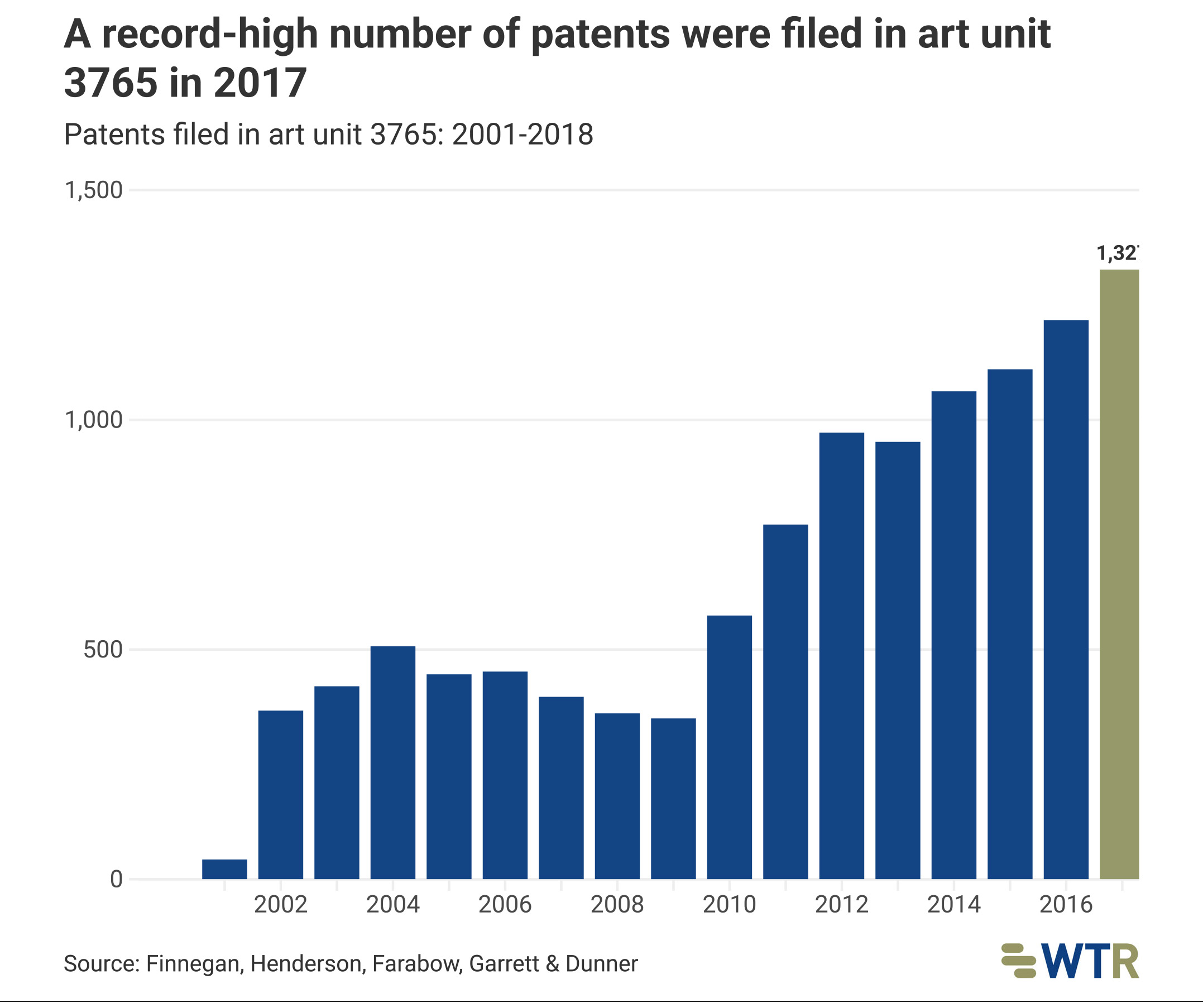
We reviewed patent grants in art unit 3765 (textiles, manufacturing) - the group at the USPTO that examines newly filed applications in the textiles space. A review of this art unit's patent applications has shown a consistent increase over the past two decades, with drastic increases in granted patents.
For example, we saw 43 patents granted in art unit 3765 in 2001, and 367 in 2002 - already a large increase.
However, in 2017 and 2018, there were 1,327 and 1,070 granted patents in art unit 3765 - more than triple the amount in the early 2000s.
Examiners tend to reject most patent applications in this unit under 35 USC § 103 obviousness, with fewer first-office actions falling under 35 USC § 101 subject-matter eligibility. This trend suggests that, despite § 101 eligibility being a prominent issue in other technology areas, it plays a relatively limited role here.
Some companies holding the most patents in this space include those in the athletic wear, sports and outdoor activity spaces. Examples include:
· Nike;
· Puma;
· Cascade Maverick Lacrosse;
· Vista Outdoor Operations;
· adidas;
· Reebok International;
· Under Armour; and
· Asics.
The increase in patent grants has also unsurprisingly led to increased patent litigation. Since 2016, companies have filed 257 cases in the US to assert patents issued from the 3765 art unit.
While we saw a decline in litigation in this space from 2020 to 2022, cases started rising again in 2023.
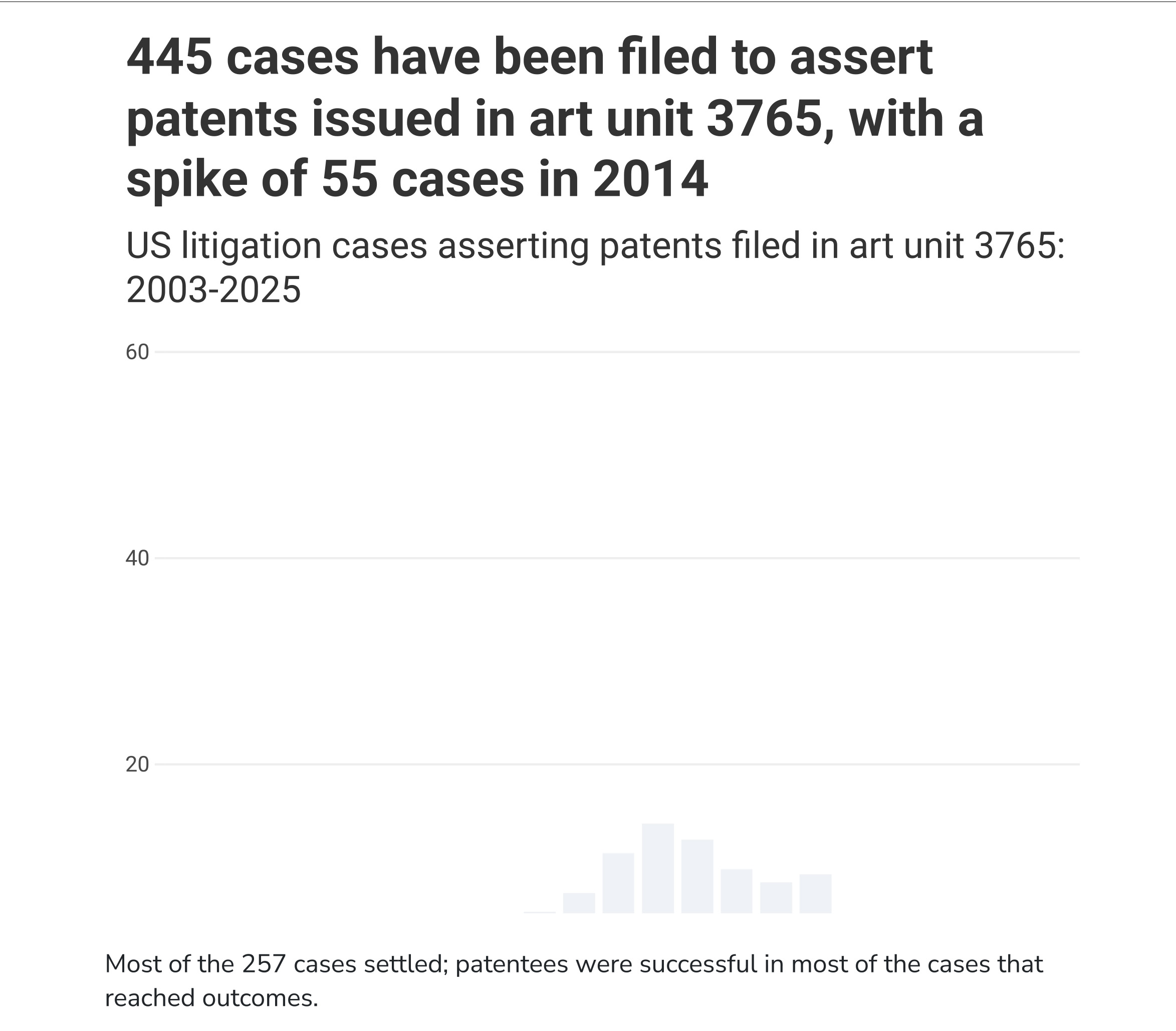
Most of the 257 cases settled; patentees were successful in most of the cases that reached outcomes.
Suing to protect market share
The amount of patent litigation in the wearable fashion industry demonstrates an increased willingness by companies to leverage their patent portfolio to protect their market share. This trend is typical when companies make large investments in R&D and want to recoup those expenses through sales.
For example, in January 2023, Nike filed a lawsuit against Lululemon asserting three utility patents: US Patents 8,266,749, 9,375,046 and 9,730,484. The patents covered Nike's Flynit technology, which involved knitted textile elements that offered enhanced support, flexibility and breathability. The jury found that Lululemon infringed the '749 patent and awarded damages. Lululemon intends to appeal, but hasn't filed it yet.
Despite the jury verdict that claims 1 to 14 of the '749 patent were valid and infringed, in a parallel proceeding at the USPTO, the PTAB found that claims 1 to 21 of the '749 patent were unpatentable. Nike appealed this ruling, but the US Court of Appeals for the Federal Circuit has not held oral arguments yet.
This litigation appears to be a part of an overall Nike strategy to protect its market share against Lululemon. Nike also filed another lawsuit alleging that Lululemon's Mirror Gym infringed Nike's 8,620,413, 9,278,256, 9,259,615, 10,188,930, 10,232,220 and 10,923,225 patents related to its exercise technology. The court stayed this case, pending inter partes reviews (IPRs) filed by Lululemon. In IPRs of the '413 and '220 patents, the PTAB found all challenged claims unpatentable. Nike has appealed, but the Federal Circuit hasn't yet held oral arguments.
Similarly, Handsfree Labs Licensing v Skechers USA Inc is another recent case driven by a desire to protect market share. In this case, Handsfree Licensing, Fast IP and Kizik Design sued Skechers USA Inc for allegedly infringing a mix of utility and design patents. The technology at issue relates to a hands-free shoe brand allegedly developed by Kizik, which resulted in an "entirely new category" of shoes that required "millions of dollars in investment". Skechers filed a motion to dismiss for failure to state a claim on 9 January, and Kizik responded on 26 January.
Taken together, these cases highlight the types of patent issues that the fashion industry will likely confront in the next year. Functional clothing often comes as a result of in-depth research and development. Companies may then turn to litigation as a tool to block competitors from coming on the market, which makes the International Trade Commission an attractive forum to litigate these types of cases. For those companies not currently selling a product, their patent portfolios can instead serve as a vehicle for monetisation, allowing them to use litigation to pursue damages (or royalties).
Ex parte reexaminations skyrocketing
With litigation, we expect that invalidity will be a heavy focus. Typically, in developing industries like wearable fashion, we see early patent filers seeking and obtaining broad patent claims. These types of claims result in more challenges to prior art validity.
Because of the breadth of the claims, infringement becomes more challenging to prove. Therefore, a good understanding of the prior art patent landscape is key when facing a patent lawsuit.
Moreover, with recent changes in the administration, the patent legal industry has seen a decrease in the number of IPR proceedings. The USPTO has issued several substantial rules to the IPR process, making it more challenging to initiate such a proceeding if there is a pending litigation. Therefore, the number of instituted IPR proceedings dropped from 65% to 82% in Q1 2025 to 15% to 34% in Q3 2025.
Now, patent practitioners are reviving an older proceeding - ex parte reexamination (EPR) - to lodge challenges to the validity of patents. People initiate these proceedings by asking the USPTO to re-examine a patent based on prior art that they believe renders the issued patent obvious.
These proceedings differ to an IPR because, as the name suggests, the proceeding involves only the patent owner and the USPTO, while IPRs involve both the patent owner and the third-party that requests the proceeding. EPRs are also cheaper and faster than IPRs.
The number of EPR requests rose by 66% from 2024 to 2025. The USPTO grants EPRs 95% of the time, as opposed to the 63% institution rate for IPRs. Thus, this increase in EPR requests underscores their growing importance as a defensive tool in patent disputes.
What's next in wearables?
In 2026, we expect to continue to see advancements in wearable technology, including in 3D knitting and the advanced manufacturing space, engineered and sustainable textiles and performance footwear and apparel design.
The Wall Street Journal recently highlighted this new wave of functional fashion, featuring wearable wellness gadgets, mouth tape and neurotechnology headbands to help with sleep, sleepwear and shapewear designed to stimulate the lymphatic system and compression garments.
Coperni's C+ athleisure line, featured at the 2025 Paris Fashion Week, is made of material embedded with bacteria that helps to rejuvenate the skin and boost radiance.
As a result of these continued functional advancements, we can expect to see an increase in combined IP protection portfolios, with companies implementing utility patents, design patents and trademarks in their brand enforcement strategies.
In conclusion, utility patents have become an integral strategic tool for protecting innovation in the fashion and apparel industry. As brands continue to rely on technology - whether through manufacturing automation, performance design or engineered textiles - functional IP rights will be at the forefront of shaping competitive boundaries.
Companies that adopt proactive patent strategies - which include a good understanding of the patent landscape - position themselves best to innovate confidently, launch products successfully and defend their products in the market in 2026 and beyond.
Related Practices
Related Offices
Related Professionals


- Bushra Z. Haque
- Associate
- Reston, VA
- +1 571 203 2720
Originally printed in World Trademark Review on January 29, 2026. This article is for informational purposes, is not intended to constitute legal advice, and may be considered advertising under applicable state laws. This article is only the opinion of the authors and is not attributable to Finnegan, Henderson, Farabow, Garrett & Dunner, LLP, or the firm’s client.