
Augmented Reality/Virtual Reality Patent Prosecution Update: 2020 Q1 Prosecution Statistics
May 11, 2020
Authored and Edited by Seth W. Bruneel; Karthik Kumar, Ph.D.; Rajeev Gupta, Ph.D.
Today, we are proud to present the first in a quarterly series of articles tracking issuance, world-wide, of Augmented Reality/Virtual Reality patents. Augmented Reality/Virtual Reality refers generally to a class of technologies that merge a view of a real-world environment with virtual objects and information or provide an entirely virtual environment as a user experience. AR/VR technologies are drawing renewed attention due in part to availability of cheaper and powerful mobile computing devices, and faster and ubiquitous communication networks. No longer are AR and VR restricted to entertainment and science fiction; they have now expanded into online shopping, workplace training, healthcare delivery, and the real estate market, just to name a few. In this series, we track the growth in AR/VR patents worldwide that we expect will accompany the rapid innovation in this technology space. We highlight trends in patenting AR/VR technologies—who is obtaining AR/VR patent protection, and where. We track the various technology centers at the United States Patent and Trademark Office that handle AR/VR applications. And, from time to time, we shine the spotlight on interesting new AR/VR patents.
In the first quarter of 2020, over 2500 patents issued around the world related to AR/VR technologies. The United States and China led the way, with the USPTO issuing over 1000 patents and the Chinese patent office issuing just over 600. Other notable mentions include Korea with 170, and Germany, Great Britain, and the European Patent Office issuing around 100 patents each.
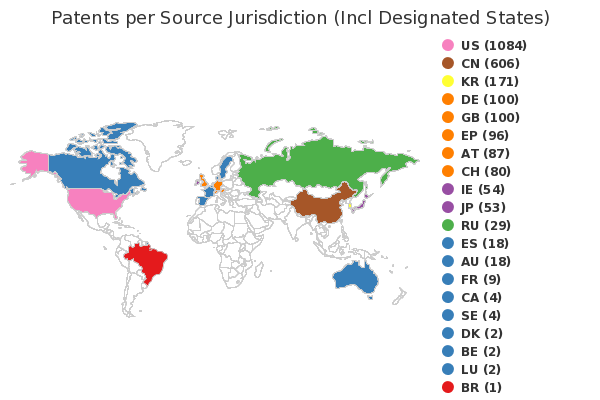
FIG. 1. Top jurisdictions for AR/VR patenting in Q1 2020
Among assignees of AR/VR patents in Q1 2020, Microsoft grabbed the top spot with over 60 patents. Alphabet came in second with 53. The rest of the top ten include familiar names, except for Align Technologies which is developing applications of AR/VR for dental and orthodontic uses.
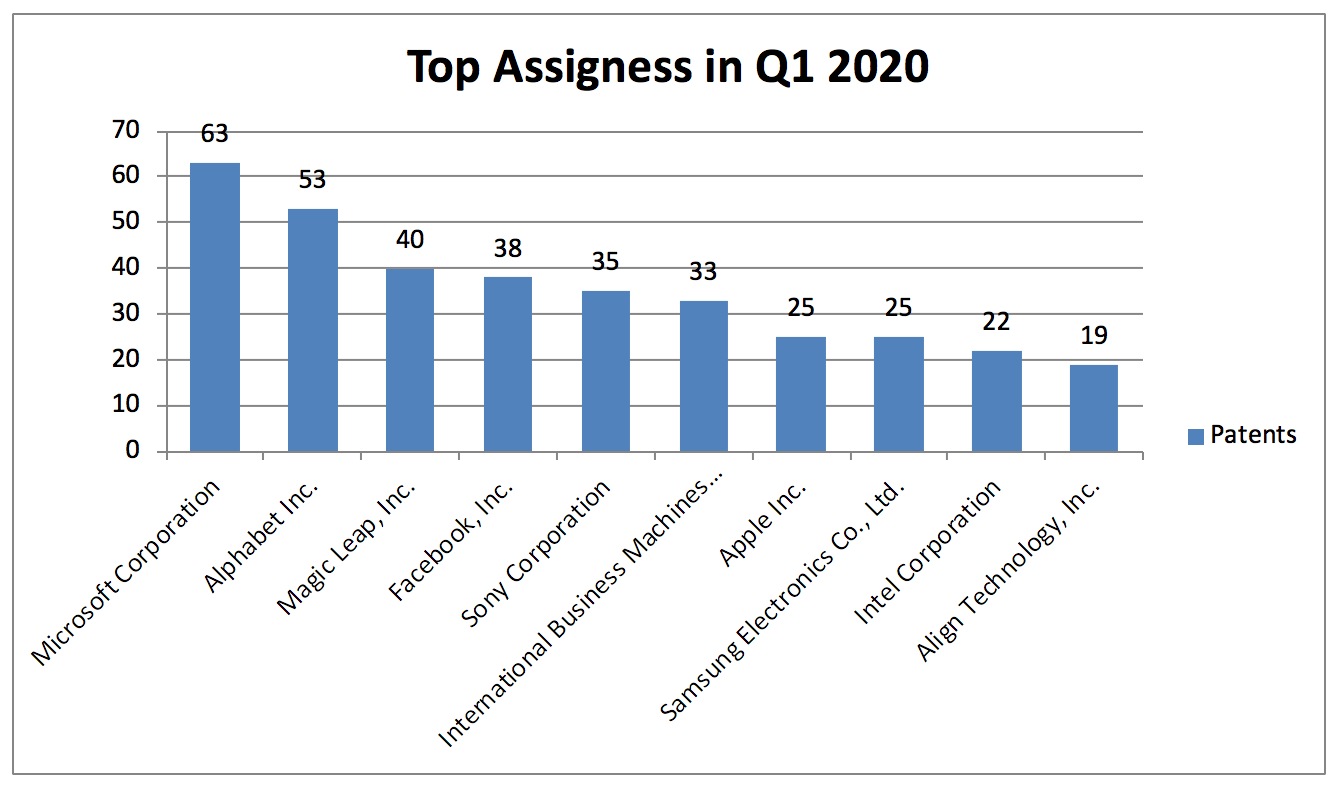
FIG. 2. Top 10 assignees by volume of AR/VR patents issued in Q1 2020
One example of a Q1 2020-issued AR/VR patent is U.S. Patent No. 10,589,625, assigned to Disney. It is directed to systems and methods for augmenting an appearance of an actual vehicle component with a virtual vehicle component. The technology allows a mixed experience between virtual components and actual components of vehicle. It will be interesting to see how Disney makes use of the technology.
In this article, we take a closer look at Technology Center 2600 of the USPTO, to which a majority of AR/VR applications filed at the USPTO are assigned. Tech Center 2600 handles applications directed to communications generally, including graphics processing, selective visual display systems, digital and optical communications, Bluetooth, and 3D animation. In the first quarter of 2020, Tech Center 2600 had an allowance rate of 86.6%. Most applications, almost 75%, had previously faced rejections based on prior art under 35 U.S.C. §§ 102 or 103. However, of all applications granted, only 26.6% filed at least one Request for Continued Examination before issuing. Another happy statistic for some, only about 11% of applications were greeted with rejections under 35 U.S.C. § 101 in the first office action, dropping all the way down to only 5% in final office actions. Tech Center 2600 is among the quicker centers, with the average time from filing to issuance at only 1 year, 11 months, and 2 days. Finally, of applicants who appealed, almost 65% won a favorable decision by the Patent Trial and Appeal Board.
Design patent protection is available in the U.S. and Canada to protect the ornamental design of an object. Companies and inventors may choose to protect hardware or graphical user interface elements using design patents. In the first quarter of 2020, only 15 design patents issued in the U.S. and Canada that appear to be directed to AR/VR technology. The majority (ten) were issued to Magic Leap.
All in all, Q1 2020 saw a significant increase in the volume of utility and design AR/VR patents around the world. With rapid advances in software and hardware innovations relevant to AR/VR, inventors and practitioners would do well to track their competitors, and their consumers, to keep their intellectual property protected and relevant.
Patent Prosecution Statistics Methodology
Our analysis includes a search of all patents granted around the world in the first quarter of 2020, from January 1 to March 31, for keywords in the title, abstract, or claims related to AR/VR technologies. We then review the data to determine which offices are issuing relevant patents and which companies are focusing on protecting their innovations in the different parts of the world. For design patents, the same search was run however, we note that the search was limited to the United States and Canada as design protection differs worldwide.
Related Practices
Related Industries
Related Offices
Contacts


Copyright © 2020 Finnegan, Henderson, Farabow, Garrett & Dunner, LLP.
DISCLAIMER: Although we wish to hear from you, information exchanged in this blog cannot and does not create an attorney-client relationship. Please do not post any information that you consider to be personal or confidential. If you wish for Finnegan, Henderson, Farabow, Garrett & Dunner, LLP to consider representing you, in order to establish an attorney-client relationship you must first enter a written representation agreement with Finnegan. Contact us for additional information. One of our lawyers will be happy to discuss the possibility of representation with you. Additional disclaimer information.