
The Federal Circuit’s Heartfelt Affirmation of Everybody’s Right to Use “Everybody vs. Racism”
March 22, 2024
Authored and Edited by Yinfei Wu; Patrick J. Rodgers; Jenevieve J. Maerker
On January 22, 2024, the Court of Appeals for the Federal Circuit affirmed a decision by the Trademark Trial and Appeal Board (the “TTAB”) to refuse registration of the phrase EVERYBODY VS RACISM in connection with merchandises and services promoting public awareness of the need for racial reconciliation. The Federal Circuit found that the way this phrase was used in the marketplace and by the applicant supported the TTAB’s decision that it could not function as a source-identifying trademark; the “citizens of the country” used it—and needed to be free to use it—to express their heartfelt stance against racism.
Back in May 2020, the applicant, Go & Associates, LLC (“Go”), started using the phrase EVERYBODY VS RACISM to “support the movements to eradicate racism globally.” Some examples of that use, as submitted to the U.S. Patent and Trademark Office (the “PTO”), are shown below:
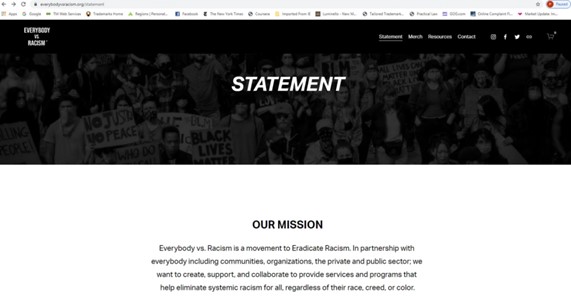
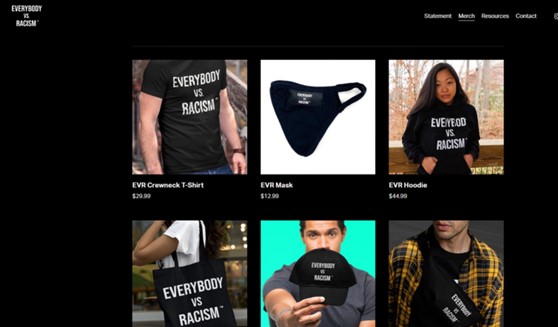
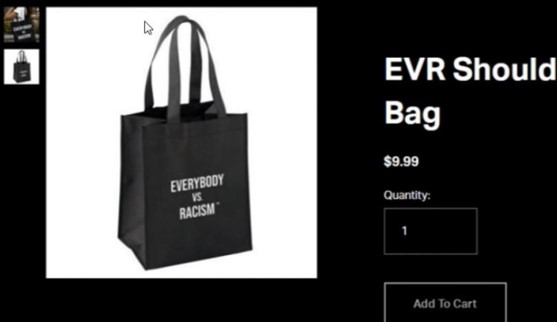
Shortly thereafter, on June 2, 2020, Go filed a use-based trademark application for EVERYBODY VS RACISM, listing “tote bags; t-shirts, hoodies as clothing, tops as clothing, bottoms as clothing, and headwear; and promotion of public interest and awareness of the need for racial reconciliation and encouraging people to know their neighbor and then affect change in their own sphere of influence” as Go’s goods and services.
Section 1202.04 of the Trademark Manual of Examining Procedures provides that matter that merely conveys information about goods and services, and does not identify source of any goods or services, is not registerable. The Federal Circuit called this the threshold “source identifier requirement” of trademark registrability, citing two U.S. Supreme Court cases from last year, Jack Daniel’s Props., Inc. v. VIP Prods. LLC, 599 U.S. 140 (2023) and Abitron Austria GmbH v. Hetronic Int’l, Inc., 600 U.S. 412 (2023). Accordingly, the examining attorney at the PTO refused registration of EVERYBODY VS RACISM because it merely informed consumers of an anti-racist sentiment and did not identify the source of Go’s goods or services. The TTAB subsequently affirmed the examining attorney’s decision.
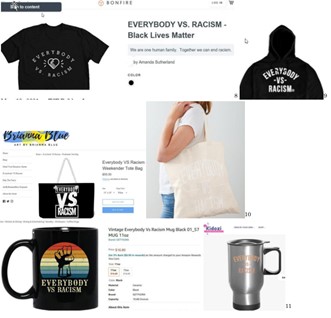
In denying registration, the examining attorney and the TTAB pointed to third-party uses of EVERYBODY VS RACISM in various contexts, including on t-shirts, bags, and other retail items; in titles of rap songs, podcasts, and church sermons; in opinion pieces, music, podcasts, and YouTube videos; and in public statements by individuals, including National Basketball Association referees, all with the purpose of “convey[ing] an anti-racist sentiment.” Examples of these third-party uses cited by the PTO appear below:
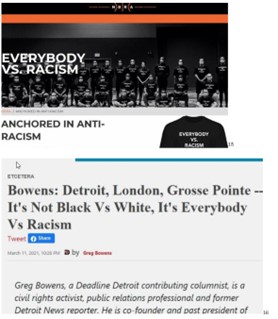
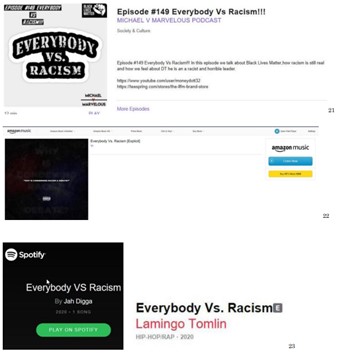
Go appealed the TTAB’s refusal of registration to the Federal Circuit, arguing that these third-party uses did not prevent Go’s use of EVERYBODY VS RACISM from functioning as a trademark. Specifically, Go contended that, unlike these third-party uses, all of which were “merely ornamental” or informational uses, Go’s uses of the phrase were source-identifying.
The Federal Circuit, however, agreed with the TTAB and rejected Go’s arguments, invoking what it called the threshold “source identifier requirement” of trademark registrability. The Federal Circuit found that, given the “diversity and breadth of third-party uses,” Go’s own specimens and uses were insufficient to turn this “informational statement against racism” into a source identifier for any goods or services. In sum, the Federal Circuit characterized Go’s challenge on appeal as “nothing more than a disagreement with the weight” that the Board gave to conflicting evidence in the record. Because reweighing evidence of record is not the role of the Federal Circuit, it upheld the Board’s decision.
Go further argued that “per se refusals based on the Informational Matter Doctrine are unconstitutional” because they “involve content-based discrimination that is not justified by either a compelling or substantial government interest.” In making this argument, Go compared EVERYBODY VS RACISM to other phrases that have been granted trademark registration, such as TRUMP TOO SMALL under In re Elster, 26 F.4th 1328 (Fed. Cir. 2022), cert. granted sub nom. Vidal v. Elster, 143 S. Ct. 2579 (2023); MAKE AMERICA GREAT AGAIN under Registration No. 5,020,556; THE SLANTS under Matal v. Tam, 582 U.S. 218 (2017); and FUCT under Iancu v. Brunetti, 139 S. Ct. 2294 (2019). The Federal Circuit distinguished these examples because the source identifier requirement was never an issue, as it was here. Moreover, the marks in these cases, while widely used and containing informational matter, still identified their owners’ goods and services. Accordingly, the Federal Circuit rejected Go’s constitutional argument based on these cases.
At the end of its opinion, the Federal Circuit emphasized again that nothing in the trademark law prohibits registration of “informational matter” that is capable of and actually does function as a source identifier for its owner’s goods or services. But if a proposed mark that contains informational matter fails to meet the source identifier requirement—like EVERYBODY VS RACISM here—it cannot be registered as a trademark.
This case is In re Go & Associates, 90 F.4th 1354 (Fed. Cir. 2024).
Related Practices
Related Industries
Related Offices
Contacts

- Yinfei Wu
- Partner
- Washington, DC
- +1 202 408 4428

- Patrick J. Rodgers
- Associate
- Washington, DC
- +1 202 408 4374

- Jenevieve J. Maerker
- Of Counsel
- Boston, MA
- +1 617 646 1655
Copyright © 2024 Finnegan, Henderson, Farabow, Garrett & Dunner, LLP.
DISCLAIMER: Although we wish to hear from you, information exchanged in this blog cannot and does not create an attorney-client relationship. Please do not post any information that you consider to be personal or confidential. If you wish for Finnegan, Henderson, Farabow, Garrett & Dunner, LLP to consider representing you, in order to establish an attorney-client relationship you must first enter a written representation agreement with Finnegan. Contact us for additional information. One of our lawyers will be happy to discuss the possibility of representation with you. Additional disclaimer information.