
Second Circuit: Warhol’s “Prince Series” Derivative, Not Transformative
August 12, 2021
Authored and Edited by Maxime I. Jarquin
The fair use doctrine can be difficult to apply in copyright infringement cases where the copying at issue allegedly furthers an artistic purpose. This challenge was on display in the Second Circuit’s reversal of the Southern District of New York’s finding that Andy Warhol’s use of a copyrighted photograph of the renowned musician Prince constituted a fair use of the portrait, holding that it did not.
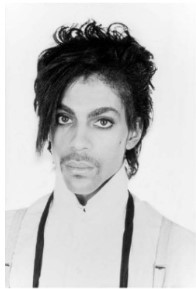
At the root of this dispute is a set of portrait pictures Lynn Goldsmith took of the celebrated pop artist in 1981. In 1984, Goldsmith licensed one of the photographs (the “Goldsmith Photograph”) to Vanity Fair, so that an artist could use it to make an illustration for an article in the magazine. This artist was none other than Andy Warhol, the most prominent figure in the Pop art movement, known for his silk screen prints. Although Warhol had a license to make only one print based on the Goldsmith Photograph, he proceeded to make fourteen additional prints. Warhol claimed a copyright over these prints, and when he died, the rights were conveyed to the Andy Warhol Foundation for the Visual Arts (“AWF”).
 |
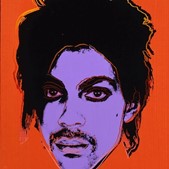 |
| The original “Goldsmith Photograph” | The Warhol print that appeared in Vanity Fair |
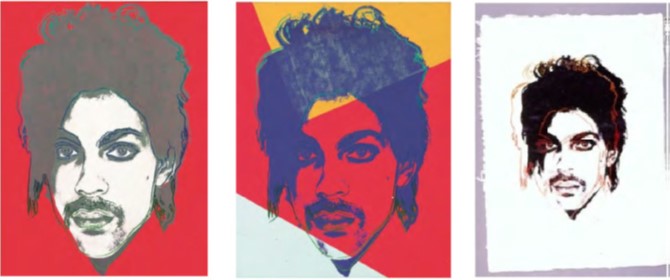
Some of the 14 “Prince Series” prints
Goldsmith discovered the existence of the additional fourteen prints Warhol made (now known as the “Prince Series”) when Prince passed away in 2016. Goldsmith then registered the Goldsmith Photograph with the Copyright Office and promptly informed AWF of Warhol’s infringement of her rights in the image. In response, AWF sued Goldsmith and her foundation for a declaratory judgement that the Prince Series was non-infringing. Goldsmith countersued for copyright infringement.
After considering the four fair use factors, the SDNY held that they all weighed in AWF’s favor, granted summary judgment to AWF, and dismissed Goldsmith’s infringement claim. In relevant part, the court found that the Prince Series was transformative because it evinced a different artistic intent than the Goldsmith Photograph. Specifically, the SDNY found that Goldsmith’s portrait shows Prince as “not a comfortable person” and a “vulnerable human being” while the Prince Series depicts him as an “iconic larger-than-life figure.” The court also found that by flattening the photograph and doing away with some of the angles and lighting Goldsmith had used, Warhol had removed “nearly all of the protectible elements” from the original.
The Second Circuit rejected the SDNY’s reasoning wholesale and found that each of the four fair use factors weighed against AWF, precluding a finding of fair use. On the purpose and character of the use factor, the court reasoned that the Prince Series is more “derivative” than “transformative” because it presents “the same material in a new form” without “adding something new.” Derivative works are excluded from the scope of fair use because the right to make derivative works of the copyrighted original is expressly granted to the copyright owner. Moreover, a secondary work that does not purport to comment or otherwise call back to the original, but only seeks to convey a “higher or different artistic use” will generally be insufficient to be transformative. Here, because the Second Circuit determined that Warhol had retained all the essential elements of the original photograph and done little to alter it, it held that the prints were not transformative, and this factor therefore weighed in Goldsmith’s favor.
In evaluating the the nature of the copyrighted work, the court found that this factor also favored Goldsmith because the photograph was both creative and unpublished, creating a presumption against fair use. As for the amount and substantiality of the portion used, the Second Circuit found that the Prince Series “borrows significantly” from the Goldsmith Photograph in that the prints are not just recognizable as deriving from some photograph of Prince but rather as deriving from the specific photograph of Prince at issue here. The court pointed to certain details of the photograph, attributable to Goldsmith’s technique, which Warhol retained, such as the way Prince’s hair appears shorter on one side of his face, or the way his moustache is lighter on one side. In fact, the court found that Warhol’s process had amplified certain aspects of the original photograph and not minimized them. This third factor was therefore found to favor Goldsmith.
Finally, concerning the effects of Warhol’s prints on the actual and potential markets for Goldsmith’s photograph, the court recognized that the images occupy different markets, and the Prince Series images are not market substitutes for the original photograph. The Second Circuit held, however, that the district court had erred in overlooking the potential harm to Goldsmith’s licensing market: by licensing the Prince Series to media and magazines (as it did with Condé Nast in 2016) AWF deprived Goldsmith of the opportunity to license the photograph and for her to earn royalty fees from her work.
Although Goldsmith prevailed at the Second Circuit, AWF has not given up the fight. After the Supreme Court’s April 2021 decision in Google v. Oracle, AWF filed a motion for reconsideration with the Second Circuit, which Goldsmith opposed. Accordingly, we may soon find out what, if any, application the fair use analysis detailed in Google v. Oracle may have outside the software context.
The case is Andy Warhol Found. for the Visual Arts, Inc. v. Goldsmith, 992 F.3d 99 (2d Cir. 2021).
Related Practices
Related Industries
Related Offices
Contacts

- Maxime I. Jarquin
- Associate
- Washington, DC
- +1 202 408 4004
Copyright © 2021 Finnegan, Henderson, Farabow, Garrett & Dunner, LLP.
DISCLAIMER: Although we wish to hear from you, information exchanged in this blog cannot and does not create an attorney-client relationship. Please do not post any information that you consider to be personal or confidential. If you wish for Finnegan, Henderson, Farabow, Garrett & Dunner, LLP to consider representing you, in order to establish an attorney-client relationship you must first enter a written representation agreement with Finnegan. Contact us for additional information. One of our lawyers will be happy to discuss the possibility of representation with you. Additional disclaimer information.