
Infringement Plagues Pharaoh’s Fortune
May 8, 2019
Authored and Edited by Jonathan J. Fagan; Margaret A. Esquenet
It makes sense to think that the “graphics and sound” in casino games are important. But are they so important that where the owner of a casino game uses another party’s artwork without permission—thus infringing the artwork owner’s copyright—the artwork owner is entitled to recover 75% of the profits earned from the infringing casino games? Moreover, where a survey asks about the importance of “graphics and sound” to the people who play casino games, but “sound” plays no part in the case, can the survey support a damages award of any amount, including one awarding 75% of the infringer’s profits?
The parties in the case are GC2, which produces artwork for a variety of uses, including casino games, and IGT, which develops casino games. GC2 had licensed artwork to IGT for use on IGT’s physical casino machines. IGT, though, used the artwork on digital, application (“app”)-based versions of the games—prominently, Pharaoh’s Fortune and Coyote Moon—which the licenses did not allow. As a result, GC2 sued IGT in federal court in Chicago (the Northern District of Illinois) for copyright infringement under 17 U.S.C. § 101 et seq. GC2 also claimed that IGT violated Section 1202 of the Digital Millennium Copyright Act (DMCA) when it removed GC2’s logo from the artwork it used on the digital games.
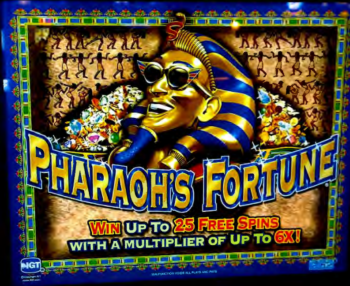
A jury recently found IGT liable on both grounds. For copyright infringement, the jury awarded GC2 75% of IGT’s profits from the infringing games, totaling $14,118,314, and for violating the DMCA it awarded GC2 $1,740,000 (based on a finding of 696 violations).
IGT filed two motions challenging the verdict, both of which are now pending before the court.
Rule 59 Motion: Jury Verdict Based on Bad Evidence
In its first motion, IGT makes two interesting arguments to obtain either a new trial or an amended judgment under Federal Rule of Civil Procedure 59. First, it argues that the evidence was insufficient to the jury’s decision to give GC2 75% of IGT’s profits. And second, it argues that the jury improperly awarded damages under the DMCA. (IGT also makes an evidentiary argument, but it’s less interesting.)
First, IGT argues that the jury awarded GC2 75% of IGT’s profits only because GC2’s counsel misrepresented surveys in closing argument. Section 504(b) of the Copyright Act (17 U.S.C. § 504) allows GC2 to recover profits “attributable to infringement”—in other words, profits traceable to IGT’s use of the infringing artwork. Here, IGT’s damages expert testified to a 5% profits apportionment. GC2, however, apparently changed gears at the end of the trial. Although it had indicated that it would call a damages expert to testify to a 25% apportionment, it decided not to have its expert testify. Instead, GC2’s counsel argued, in closing, that the surveys it had introduced into evidence supported a 75% apportionment.
IGT argues that GC2’s counsel misrepresented the surveys, and that the jury based its verdict on that misrepresentation. The surveys asked game players whether certain features were important to a game. Eighty percent of respondents said that “graphics and sound” were important to a game, and GC2’s counsel argued that this data supported a 75-80% apportionment.
IGT makes a number of arguments regarding why this argument was improper and the surveys were insufficient to support the jury’s award. Initially, it argues that the relevant inquiry is not whether “graphics and sound” are important to the players of a game but, rather, whether they affect a player’s decision to play the game, which is a different question (and one the surveys did not ask). Additionally, IGT observes that the survey did not distinguish between graphics (which was all that was at issue in the case) and sound (which was not at issue in the case). Furthermore, IGT notes that 80% of survey respondents said that “ease of use” was also important to a game and argues that this shows that a survey indicating that 75% of respondents think a particular feature is important cannot support an award of 75% of the infringer’s profits. (Otherwise, IGT argues, a survey involving multiple infringed factors could be used to justify an award of more than 100% of profits.) IGT thus argues that the jury’s error in basing its 75% apportionment on these surveys warrants a new trial.
Second, IGT argues that the evidence did not support the jury’s verdict of 696 DMCA violations. GC2 presented an allegedly never-before-disclosed DMCA theory at trial. Under the DMCA, damages are calculated according to the number of violations, so it was in GC2’s interest to calculate a high number of violations. So GC2 argued that each time any new game was the app, then all games were reuploaded (including Pharaoh’s Fortune and Coyote Moon). Based on this theory, GC2 calculated 696 DMCA violations. But IGT argues that the evidence supported, at most, four DMCA violations—two for uploading Pharaoh’s Fortune and Coyote Moon and no more than two for removing GC2’s logo from the artwork.
Rule 50(b) Motion: Evidence Doesn’t Show DMCA Violation
In its second motion, under Federal Rule of Civil Procedure 50(b), IGT seeks an amended judgment because the evidence allegedly doesn’t support GC2’s DMCA-violation theory.
Again, at trial GC2 argued to the jury that IGT’s uploading the digital games without the proper logo violated the DMCA. IGT argues that the evidence did not support the requisite finding of intent to “induce, enable, facilitate, or conceal an infringement.” 17 U.S.C. § 1202(a). For example, a vice president of subsidiary responsible for the app testified that he didn’t know that the artwork for Pharaoh’s Fortune and Coyote Moon was reuploaded each time a new game was uploaded to the app. How—IGT argues—can the subsidiary have possessed the requisite intent if it wasn’t even aware of the fact of the upload?
IGT further argues that the removed logo would constitute a DMCA violation only if the logo had been removed from an original work. The artwork included in the games on the app had been altered from GC2’s original artwork as displayed on IGT’s physical casino games. IGT argues, then, that even if the logo was removed, it would not violate the DMCA.
At the time of writing, GC2 has yet to respond to these motions. Copyright practitioners should watch this dispute to see whether the court will agree with IGT that the surveys could not support the jury’s apportionment rate and whether the evidence will satisfy the DMCA’s intent requirement.
Related Practices
Related Industries
Contacts

- Jonathan J. Fagan
- Associate
- Washington, DC
- +1 202 408 4119
Copyright © 2019 Finnegan, Henderson, Farabow, Garrett & Dunner, LLP.
DISCLAIMER: Although we wish to hear from you, information exchanged in this blog cannot and does not create an attorney-client relationship. Please do not post any information that you consider to be personal or confidential. If you wish for Finnegan, Henderson, Farabow, Garrett & Dunner, LLP to consider representing you, in order to establish an attorney-client relationship you must first enter a written representation agreement with Finnegan. Contact us for additional information. One of our lawyers will be happy to discuss the possibility of representation with you. Additional disclaimer information.