
Fair Use Defense Generally Inapplicable in Board Proceedings
June 12, 2015
Authored and Edited by Naresh Kilaru
Is the very fact of applying for a trademark registration inconsistent with a parody or fair use defense? In a recent precedential decision that departs from the TTAB’s prior stance on this issue, the Board has answered this question in the affirmative. See New York Yankees Partnership v. IET Products and Services, Inc., Opposition No. 91189692 (TTAB May 8, 2015).
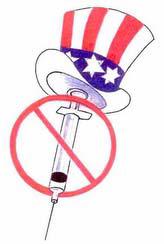
The applicant in this case sought to register the mark THE HOUSE THAT JUICE BUILT and the design shown below for various collateral products such as t-shirts, baseball caps, and sweatshirts:
The New York Yankees opposed on grounds of likelihood of confusion and dilution based on their prior rights in the mark THE HOUSE THAT RUTH BUILT and the design below:
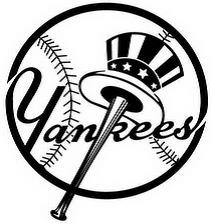
The Board considered only the dilution claim. With respect to fame, the Board easily found that both the Yankees’ word mark and design were famous based on decades of use and substantial promotion. The Board also concluded that the parties’ marks were sufficiently similar that the applicant’s marks would trigger an association with the marks owned by the Yankees.
On the issue of similarity, the applicant argued that the association between the parties’ marks was intended because the entire purpose of its marks was to convey the message that the Yankees’ recent success could be attributed to their players’ use of performance-enhancing drugs. Based on this intended meaning, the applicant argued that its marks were a parody under 15 U.S.C. § 43(c)(3), which bars dilution claims against marks that parody, criticize, or comment upon the famous mark owner.
The Board rejected this argument, noting that a prerequisite for claiming any type of fair use under Section 43(c)(3) was that the mark be used “other than as a designation of source for the person’s own goods or services.” 15 U.S.C. § 43(c)(3)(A). Because the very fact of applying for a trademark registration means that an applicant intends its mark to be a designation of source, the Board held that the fair use defense (including a parody defense) is “typically inapplicable” in Board cases. Indeed, given that the filing of an application is completely at odds with the statutory prerequisite for claiming fair use, the Board stated, “we find it virtually impossible to conceive of a situation where a parody defense to a dilution claim can succeed in a case before the Board.” In so holding, the Board modified the position it had taken on this issue in a prior decision, Research in Motion Ltd. v. Defining Presence Marketing Group, Inc., 102 USPQ.2d 1187 (TTAB 2012), where it held that a claim of parody could be assessed “as part of the circumstances to be considered for determining whether the [opposer] has made out a claim for dilution by blurring.”
This decision makes clear that any type of fair use defense (including but not limited to parody) will generally be inapplicable in Board proceedings. Rather, such defenses make more sense in district court cases where the defendant has never attempted to secure a registration and can plausibly maintain that its mark is being used “other than as a designation of source.”
Contacts

Copyright © 2015 Finnegan, Henderson, Farabow, Garrett & Dunner, LLP.
DISCLAIMER: Although we wish to hear from you, information exchanged in this blog cannot and does not create an attorney-client relationship. Please do not post any information that you consider to be personal or confidential. If you wish for Finnegan, Henderson, Farabow, Garrett & Dunner, LLP to consider representing you, in order to establish an attorney-client relationship you must first enter a written representation agreement with Finnegan. Contact us for additional information. One of our lawyers will be happy to discuss the possibility of representation with you. Additional disclaimer information.