
“Carbon Neutral” Claims: Yet More Grounds for Caution
February 14, 2024
Authored and Edited by Jennifer E. Fried
Sustainability claims have long faced scrutiny. Between the FTC’s Green Guides, a series of increasingly restrictive California laws, and the ongoing specter of class action lawsuits, “green” claims court risk from every direction. A recent decision out of the Southern District of New York adds yet another reason for caution—particularly with respect to “carbon neutral” claims.
In an opinion that largely declined to dismiss a class action suit against Danone Waters of America (Danone), the court found that Danone’s “carbon neutral” claim could be understood to mean “zero carbon emissions.” The opinion stems from a class action lawsuit alleging that Danone Waters—in marketing its evian bottled water—violated various state laws by labeling its evian water as “Carbon Neutral,” along with a footprint and a reference to the third-party certification body, “Carbon Trust.”
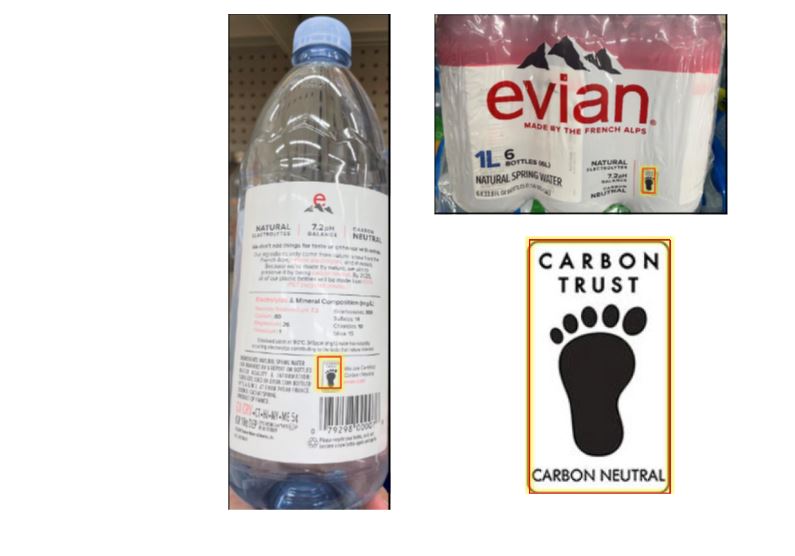
Danone insisted that its “carbon neutral” claim was borne out by its product’s third-party certification. More generally, Danone disputed the notion that “carbon neutral” is understood to mean “emitting no carbon dioxide at all.” It pointed to dictionary definitions of “carbon neutral” that contemplate the use of offsets to balance emissions. Danone also noted that its product’s website explains evian’s approach to reducing and offsetting emissions.
None of these arguments held water—bottled or metaphorical—before the court. Despite dictionary definitions noting that “carbon neutral” status can be achieved with offsets, the court held that the term “carbon neutral” was “a technical word not within an average consumer’s common parlance.” It noted that “[a] reasonable consumer may plausibly understand ‘carbon neutral,’ a term whose meaning varies even within its own industry, to mean ‘zero carbon emissions.’” The court added that “carbon neutral” is precisely the sort of “unqualified general environmental benefit” claim that is prohibited by the FTC’s Green Guides.
While other courts may construe the term differently, it’s clear which way the wind is blowing. “Carbon neutral” claims are risky territory. Steps to mitigate risk involve qualifying “carbon neutral” claims and referencing the use of offsets where applicable.
Related Practices
Related Industries
Related Offices
Contacts

Copyright © 2024 Finnegan, Henderson, Farabow, Garrett & Dunner, LLP.
DISCLAIMER: Although we wish to hear from you, information exchanged in this blog cannot and does not create an attorney-client relationship. Please do not post any information that you consider to be personal or confidential. If you wish for Finnegan, Henderson, Farabow, Garrett & Dunner, LLP to consider representing you, in order to establish an attorney-client relationship you must first enter a written representation agreement with Finnegan. Contact us for additional information. One of our lawyers will be happy to discuss the possibility of representation with you. Additional disclaimer information.