
IP Considerations for the Food and Beverage Industry Series: Three Reasons Why Design Patents May Be the Right Choice for Your Food Packaging
September 19, 2018
Food packaging may be nearly as important as the food in the package. In 2010, Heinz launched the Dip & Squeeze ketchup packet, claiming it was the first upgrade in the ketchup packet in more than forty years. In 2013, Anheuser-Busch InBev launched a screw-top aluminum bottle, which was a hit with consumers. These bottles are recyclable and lightweight, and are said to keep the beer cooler longer than glass bottles. Sales of the aluminum bottles have quadrupled since 2013. And what do these packages have in common? They are both protected by design patents.
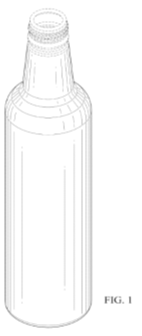
D739,732, Metal Beverage
In fact, food and beverage companies should consider design patents for at least three reasons.
- Protect Your New Packaging. Companies often introduce a new product with completely new packaging. Consumer attention spans are limited, and it is important to get out in front of those who might copy your new product. In that case, companies can turn to design patents, because they guard against more than just direct copying. Design patents provide the owner the right to exclude others from making articles that look identical to the patented design, but also articles that are substantially the same as the patented design when considered in context of prior designs. Moreover, while it is often true that your competitor used your design as a blueprint for its product, unlike with copyright, there is no need to show that the competitor copied your product or even knew about your design patent. If you need to enforce, this can streamline your case significantly.
- Everything Old Is New Again. Other times, a company may have a well-known product, such in the cases of Heinz or Anheuser-Busch, but turn to new packaging to refresh the brand or provide some other benefit to the consumer. A common misconception is that a single article cannot be protected by both design and utility patents. This is not true. Just because the aluminum bottle may keep the beer cooler longer, this does not mean that the bottle’s design does not possess some ornamental features that can be protected by a design patent.
- Some Food May Be Difficult to Protect with IP on Its Own. A company may sell a range of foods, using consistent packaging to give cohesion to their product line. Acquiring individual IP rights in each of those foods may be impossible (if the food is not novel) or may not be within a company’s budget. Protecting the packaging may be a cost-effective solution.
Luxury candy maker Sugarfina makes many different kinds of candy. Rather than protecting all of those different candies, Sugarfina has protected its Bento Box packaging with a series of design rights protecting its many different configurations (e.g., three sets of candies, eight sets of candies, etc.).
Likewise, in 2014, Kraft introduced a three-part packaging for its P3 Portable Protein Pack snacks, containing small portions of nuts, meats, and cheese. Before introducing this product (U.S. design patents must be filed within one year of public disclosure of a design), Kraft filed a series of design patent applications covering its “dumbbell”-shaped packaging. More recently, Kraft has expanded this packaging to its Trios Snackfulls line, which are likely covered by the existing patents. Kraft’s example shows that design patents for packaging are independent of their contents, meaning that your IP can continue to work for you even when you expand your line of products.
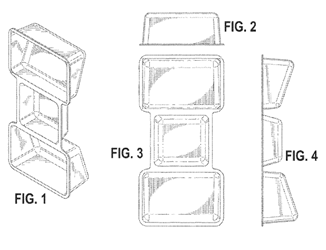
D798,738, Package
But most importantly, these patents don’t just decorate the walls of these companies. Sugarfina and Kraft have recently filed to suit to keep competitors from mimicking their patented product packaging.
In July, Sugarfina filed suits against multiple competitors claiming infringement of its design, trade dress, and copyright rights in certain product packaging, including its Bento Box. See, e.g., Sugarfina, Inc., v. Bouquet Bar, Inc. et al, Case No. 8:18-cv-1305 (C.D. Cal., filed July 27, 2018). Just last week, Kraft filed suit against D6, Inc. asserting two design patents directed to its dumb-bell shaped snack packages. Kraft alleges that D6 is providing packaging to various food companies who are selling packaged food at groceries stores in Texas. Kraft Foods Group Brands, Inc. v. D6 Inc., Case No. 3-18-cv-01653 (D. Or., filed September 12, 2018). Both cases are still pending.
These are just a few good reasons to consider design patent protection for your new food packaging!
Click here to read other articles in our series.
Related Practices
Related Industries
Related Offices
Related Professionals

Copyright © Finnegan, Henderson, Farabow, Garrett & Dunner, LLP. This article is for informational purposes, is not intended to constitute legal advice, and may be considered advertising under applicable state laws. This article is only the opinion of the authors and is not attributable to Finnegan, Henderson, Farabow, Garrett & Dunner, LLP, or the firm’s clients.