
Prosecution History Estoppel & Unelected Designs
November 22, 2016
Authored and Edited by Elizabeth D. Ferrill; Adriana L. Burgy
District Court Decision: Advantek Marketing, Inc. v. Shanghai Walk-Long Tools Co., Case No. 16-3061 (C.D. Cal. Nov. 3, 2016).
Background:
In 2014, the Federal Circuit recognized that prosecution history estoppel applies to design patents, specifically in the context of amendments made in response to a restriction requirement. Pacific Coast Marine Windshields Ltd. v. Malibu Boats, 739 F.3d 694 (Fed. Cir. 2014). In Pacific Coast, the Federal Circuit held that cancelling an embodiment in a design patent application in response to a restriction requirement is a surrender of the cancelled subject matter and that such a surrender is made in order to secure the patent. But Pacific Coast did not address the exact scope of the surrender, noting that it would be based on what design was elected, what design was not, and the circumstances of the case.
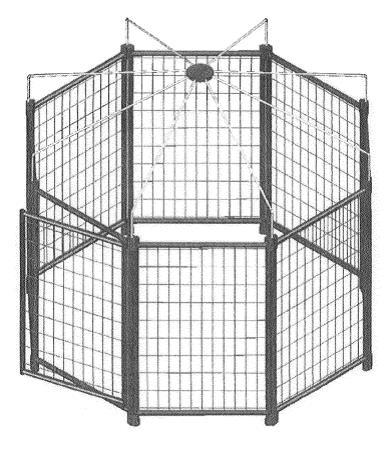
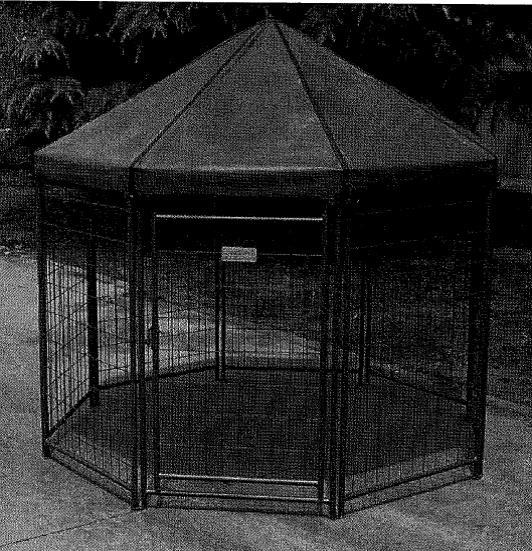
More than two years later, a district court has finally applied Pacific Coast granting an accused infringer’s motion for judgment on the pleadings. In this case, Advantek asserted its design patent directed to a pet kennel. Taking judicial notice of the patent’s prosecution history, the district court noted that the examiner issued a restriction requirement between a first embodiment (directed to a kennel without a cover) and a second embodiment (directed a kennel with a cover) and Advantek elected to proceed with the kennel design without a cover. It does not appear that a design patent directed to the second embodiment has issued. Citing Pacific Coast, the district court noted that “Success under the doctrine of prosecution history estoppel “turns on the answers to three questions (1) whether there was a surrender; (2) whether it was for reasons of patentability; and (3) whether the accused design is within the scope of surrender.” Here, the district court found that prosecution history estoppel applies because Advantek surrendered the kennel design with cover, that the surrender was made to secure the patent directed to the kennel design without the cover, and most importantly, that the Shanghai Walk-Long design was within the scope of the surrendered design.
 |
 |
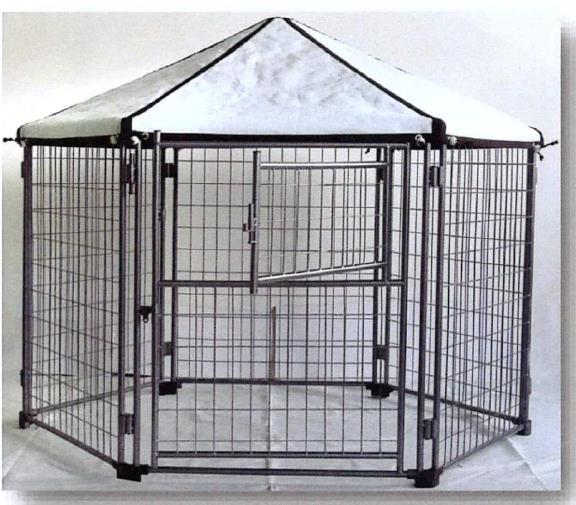 |
Fig. 1, US D715,006(Determined by examiner to be Embodiment No. 1) |
Fig. 5, App. No. 29/398,906(Determined by examiner to be Embodiment No. 2) |
Shanghai Walk-Long’s Accused Product |
Issue: What is the effect of prosecution history estoppel following election of embodiment in a design case?
Outcome: The district court found that the accused infringer was entitled to a judgment as a matter of law, because the patent owner’s claim was barred by the doctrine of prosecution history estoppel.
Prosecution Takeaway: In the U.S., design patents are only permitted to have a single claim. As a result, design patent applications are frequently the subject of restriction requirements. If an applicant is required to make an election, then the applicant should plan to file divisional applications covering all of the unelected designs. If the applicant decides not to pursue such divisional applications, then the applicant should appreciate that it may be barred by the doctrine of prosecution history estoppel from asserting unelected designs.
Contacts


Copyright © 2016 Finnegan, Henderson, Farabow, Garrett & Dunner, LLP.
DISCLAIMER: Although we wish to hear from you, information exchanged in this blog cannot and does not create an attorney-client relationship. Please do not post any information that you consider to be personal or confidential. If you wish for Finnegan, Henderson, Farabow, Garrett & Dunner, LLP to consider representing you, in order to establish an attorney-client relationship you must first enter a written representation agreement with Finnegan. Contact us for additional information. One of our lawyers will be happy to discuss the possibility of representation with you. Additional disclaimer information.
