
On Remand, Southern District of New York Grants Summary Judgment for Defendant Oprah in ‘Own Your Power’ Dispute
March 17, 2015
Authored and Edited by Julia Anne Matheson; Eleanor Atkins
In the long-running dispute between the owner of a small motivational services business and Oprah Winfrey and her various companies, the Southern District of New York ruled again for defendant Winfrey, and against the registrant plaintiff, this time on summary judgment.
Plaintiff hosts a radio show, holds conferences and retreats, and writes a blog around the concept of OWN YOUR POWER. She owns a federal registration for the mark in stylized format covering, inter alia, workshops and seminars in the field of entrepreneurship, marketing, business networking, and personal awareness; and providing live and online radio programs on the topic of entrepreneurship.
The case’s history dates back to O Magazine’s prominent use, on the cover of its October 2010 issue, of the phrase OWN YOUR POWER in connection with a series of articles on self- empowerment.
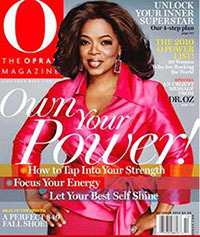
The magazine subsequently presented an event titled OWN YOUR POWER, which it promoted on The Oprah Winfrey Show, in O Magazine, on the O website, and across social media described as the “First-Ever OWN YOUR POWER EVENT.” The event offered a seminar and workshop offering motivational advice regarding self-awareness, self-realization, and entrepreneurship. Following the event, Oprah placed OWN YOUR POWER video clips, banners, and content across 75 different webpages. Plaintiff sued.
In its first run at plaintiff’s infringement, counterfeiting, and other claims, the SDNY granted Oprah’s motion to dismiss, concluding that the phrase was used as a headline, not a trademark, was used descriptively, and was used in good faith without an intent to trade off plaintiff’s goodwill.
On appeal, the Second Circuit reversed, and thereby created a split in the circuits as to whether a use must constitute a trademark use to be actionable. The Second Circuit concluded that the Sixth Circuit’s affirmative answer set too high a standard, ruling that a plaintiff need only show that a mark was used in commerce and not that it was used as a mark. While agreeing with the district court that plaintiff’s vicarious infringement, contributory infringement, and counterfeiting claims should be dismissed, the Second Circuit found that the plaintiff had stated a valid claim for infringement by alleging that Oprah was attempting to build a new segment of her media empire around the OWN YOUR POWER catchphrase. The Second Circuit remanded the case to the SDNY for further consideration of that claim.
Following extensive discovery, and in direct contravention of some of the factual findings of the Circuit Court, the SDNY ruled again for Oprah, this time on summary judgment.
While acknowledging plaintiff’s ownership of a federal registration and the presumption of validity that follows therefrom, the district court pointed to the registration’s express disclaimer of the phrase “OWN YOUR POWER” in concluding that plaintiff’s rights were limited to the mark’s stylization, rather than the phrase itself. Finding that defendants had viably demonstrated that the OWN YOUR POWER mark was descriptive of the life/career empowerment services plaintiff provided, the court also concluded that despite extensive discovery plaintiff had failed to come close to raising a material fact as to the acquisition of secondary meaning in the mark.
While noting that it need not undertake a likelihood-of-confusion analysis, the court nevertheless proceeded to do so finding plaintiff’s mark lacked marketplace strength, the parties’ respective uses were dissimilar and unlikely to confuse consumers, and the parties’ platforms so distinct that cross-over confusion was not likely. In issuing its decision, the court’s clear sympathy for the Oprah organization was abundantly clear.
Finally, despite the directive of the Second Circuit and the lack of need to address the issue given its earlier findings, the district court nevertheless turned its attention back to the question of descriptive fair use, reiterating its earlier findings in Oprah’s favor. The SDNY rejected outright the suggestion of any persuasive evidence of a plan to create a sub-brand noting the defendants’ inconsistent use of the phrase and consistent use of its own established marks. The court thus concluded that the phrase OWN YOUR POWER was commonly used, was used in a descriptive non-trademark way, and was not used in bad faith, thereby concluding that the defendants’ use was a fair use.
Copyright © 2015 Finnegan, Henderson, Farabow, Garrett & Dunner, LLP.
DISCLAIMER: Although we wish to hear from you, information exchanged in this blog cannot and does not create an attorney-client relationship. Please do not post any information that you consider to be personal or confidential. If you wish for Finnegan, Henderson, Farabow, Garrett & Dunner, LLP to consider representing you, in order to establish an attorney-client relationship you must first enter a written representation agreement with Finnegan. Contact us for additional information. One of our lawyers will be happy to discuss the possibility of representation with you. Additional disclaimer information.