
Ninth Circuit Evaluates Office Chair Trade Dress as Work-from-Home Continues
July 16, 2020
Authored and Edited by Morgan E. Smith; Margaret A. Esquenet
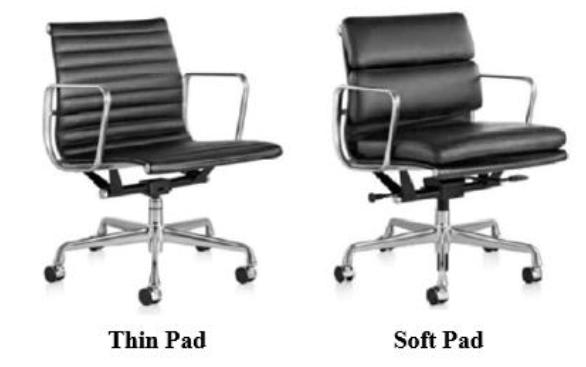
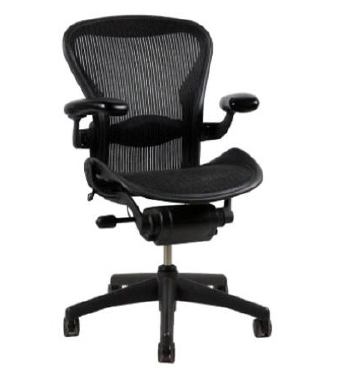
In 2013, Herman Miller, Inc. (which sells home and office furniture) sent a cease-and-desist letter to Blumenthal Distributing, Inc. (d/b/a Office Star Products), alleging that Office Star was selling “knockoff” office chairs that look like Herman Miller’s Eames and Aeron chairs:
Eames Chairs
Aeron Chairs
In 2016, after trial in the Central District of California, a jury ruled in favor of Herman Miller, finding that its Eames chair trade dress was protectable, and that Office Star had willfully infringed and diluted that trade dress. Herman Miller was eventually awarded $3,378,966 in damages on the infringement claims and $3,000,000 in damages on the dilution claim, and Office Star was enjoined from continuing its unlawful activities. However, with respect to the Aeron chair, the jury found that the Aeron chair trade dress was functional, and therefore unprotectable. Judgment was entered holding the Aeron chair trade dress unprotectable and cancelling Herman Miller’s federal trademark registration for the trade dress. Given the split victories, both parties appealed.
On appeal, the Ninth Circuit (1) affirmed the judgment in favor of Herman Miller regarding infringement of the Eames chair trade dress, (2) reversed the judgment in favor of Herman Miller regarding dilution of the Eames chair trade dress, and (3) reversed the judgment in favor of Office Star regarding the Aeron chair and remanded for a new trial.
On the Eames chair trade dress infringement claim, Office Star argued that the trade dress was functional (and thus unprotectable) because (1) the chairs have some utilitarian function and (2) the utilitarian functionality of the chairs’ various individual features proves that their overall appearance is functional under controlling precedent. The Ninth Circuit rejected both arguments. The Ninth Circuit quickly dismissed Office Star’s first argument because a product’s overall appearance is functional only if everything about it is functional, not merely if anything about it is functional. Office Star’s second argument also failed because Herman Miller presented “abundant” evidence that the Eames chairs’ overall appearances “derive from non-utilitarian design choices.” A reasonable jury therefore could have concluded that the Eames chair trade dress is not functional.
On the dilution claim, the Ninth Circuit found that there was “legally insufficient evidence” to find that the Eames chair trade dress was “famous” under the Lanham Act. 15 U.S.C. § 1125(c)(2)(A). The Ninth Circuit discussed the “very high standard for establishing fame among the general public,” noting that famous marks are a “select class” of marks “truly prominent and renowned” and “part of the collective national consciousness.” After examining Herman Miller’s evidence—an average of $550,000 per year in advertising spend; the chairs’ appearance in “obscure” publications; Herman Miller’s social media followings, distributors, and dealers; the chairs’ appearance in various TV shows and movies, including Mad Men; and the chairs’ appearance in many museum exhibitions—the Ninth Circuit held that the trade dress was not famous. Judge Friedland dissented to this portion of the Court’s ruling, arguing that this was not one of the “rare cases” in which a jury verdict should be overturned.
Finally, on the Aeron chair trade dress infringement claim, Herman Miller challenged a jury instruction (which came from the Ninth Circuit’s Model Civil Jury Instructions) as an “erroneously broad definition of functionality.” The Ninth Circuit agreed, holding that Ninth Circuit Model Civil Jury Instruction 15.12 misstates the law regarding trade dress functionality. Because “the mere fact that [a] mark is the ‘benefit that the consumer wishes to purchase’” is not sufficient to establish functionality, the jury instruction was improper and, because the error was not harmless, the Ninth Circuit remanded for a new trial on Herman Miller’s Aeron chair trade dress claims.
The case is Blumenthal Distrib., Inc. v. Herman Miller, Inc., No. 18-56471, 2020 WL 3548260 (9th Cir. June 25, 2020)
Related Practices
Related Industries
Related Offices
Contacts

Copyright © 2020 Finnegan, Henderson, Farabow, Garrett & Dunner, LLP.
DISCLAIMER: Although we wish to hear from you, information exchanged in this blog cannot and does not create an attorney-client relationship. Please do not post any information that you consider to be personal or confidential. If you wish for Finnegan, Henderson, Farabow, Garrett & Dunner, LLP to consider representing you, in order to establish an attorney-client relationship you must first enter a written representation agreement with Finnegan. Contact us for additional information. One of our lawyers will be happy to discuss the possibility of representation with you. Additional disclaimer information.