
Honey Sweetened or Honey Flavored? Sweetener vs. Flavor False Ad Dispute Survives Motion to Dismiss
June 2, 2020
Authored and Edited by Brooke M Wilner; Margaret A. Esquenet
The packaging for Post’s “Honey Bunches of Oats” cereal depicts a large sunburst adorned with the product’s name in all capital letters, a wooden honey dipper dripping with honey, and the flight path of a bee. Taken together, these features could potentially lead a reasonable consumer to believe that honey is the primary sweetener or ingredient in the cereal, the Northern District of California recently held in Tucker v. Post Consumer Brands, LLC.
Peter Tucker filed a putative class action against Post Foods under California false advertising law, alleging that the product’s branding and packaging led him to believe it was primarily or exclusively sweetened with honey, a sweetener allegedly preferable to refined substances like sugar and corn syrup. In other words, Tucker’s complaint focused on whether honey was presented as a primary sweetener, not merely a predominant flavor.
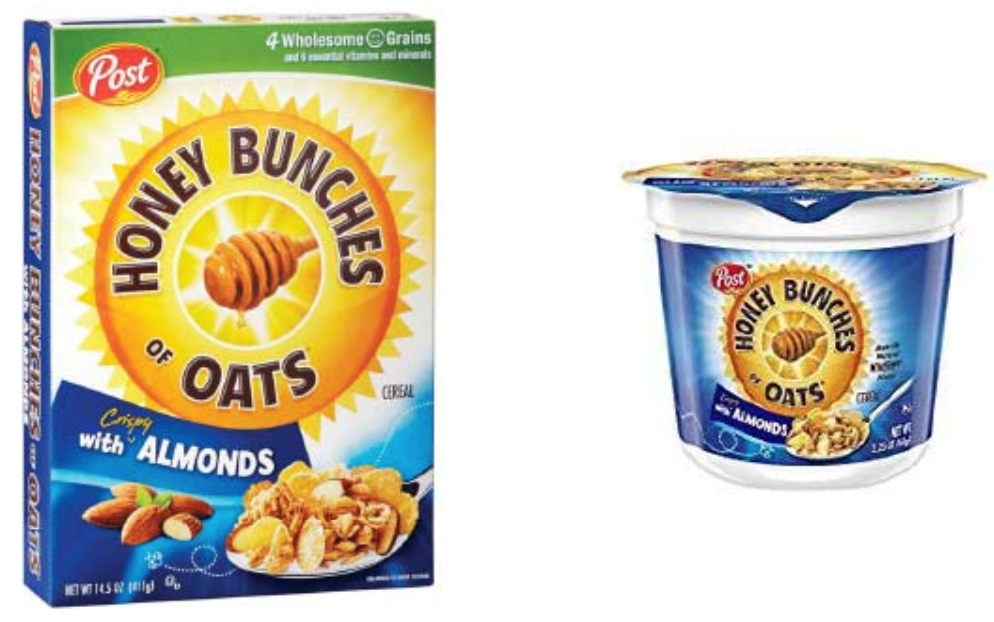
The distinction between sweetener and flavor proved important. In its motion to dismiss, Post argued that Tucker’s claims were federally preempted by the Food Drug and Cosmetics Act’s (“FDCA”) labeling requirements, which permits companies to make representations regarding “primary recognizable flavor(s)” through words, photos, and other depictions. Since honey is the primary recognizable flavor in its cereal, Post argued that its use of the word honey and other images was permitted by the FDCA. But Tucker’s complaint did not focus on whether honey was a primary flavor but rather a sweetener. The court thus found that Tucker’s claim was not necessarily preempted by the FDCA. Whether honey is the primary recognizable flavor, sweetener, or perhaps both was not appropriately resolved on a motion to dismiss, the court held.
Post also unsuccessfully argued that reasonable consumers would not be deceived. The court acknowledged that the product did contain some honey. Nonetheless, the court found that the packaging—displaying honey as the primary image—could potentially encourage a reasonable consumer to believe honey was not just one of many ingredients but rather the primary ingredient. This conclusion was bolstered by survey evidence, provided by Tucker, which found 68% of surveyed consumers believed honey was the main sweetener and 80% believed it was a main ingredient. The court thus denied Post’s motion to dismiss Tucker’s complaint.
The case is Tucker v. Post Consumer Brands, LLC, No. 19-cv-03993-YGR (N.D. Cal. Apr. 21, 2020).
Related Practices
Related Industries
Related Offices
Copyright © 2020 Finnegan, Henderson, Farabow, Garrett & Dunner, LLP.
DISCLAIMER: Although we wish to hear from you, information exchanged in this blog cannot and does not create an attorney-client relationship. Please do not post any information that you consider to be personal or confidential. If you wish for Finnegan, Henderson, Farabow, Garrett & Dunner, LLP to consider representing you, in order to establish an attorney-client relationship you must first enter a written representation agreement with Finnegan. Contact us for additional information. One of our lawyers will be happy to discuss the possibility of representation with you. Additional disclaimer information.


