
Post Grant Outcomes Program Has Taken Off
September 08, 2016
Authored and Edited by Hojung Cho; Stephanie M. Sanders
During its most recent Patent Public Advisory Committee (PPAC) meeting, the USPTO shared an update on the Post Grant Outcomes (PGO) Pilot program, which commenced in April of this year. As we previously reported, the PGO program was initiated to identify those patents being challenged at the PTAB that have pending related applications and provide the examiners of those pending related applications access to the prior art submitted with the post grant proceeding petition. The three stated objectives of the PGO are (1) enhanced patentability determinations in related child cases, (2) targeted examiner training, and (3) examining corps education. The USPTO has generally assessed that the PGO program has met its goal of shining a spotlight on highly relevant prior art uncovered in post grant proceedings and, thus, has enhanced the determination of patentability in related child cases.
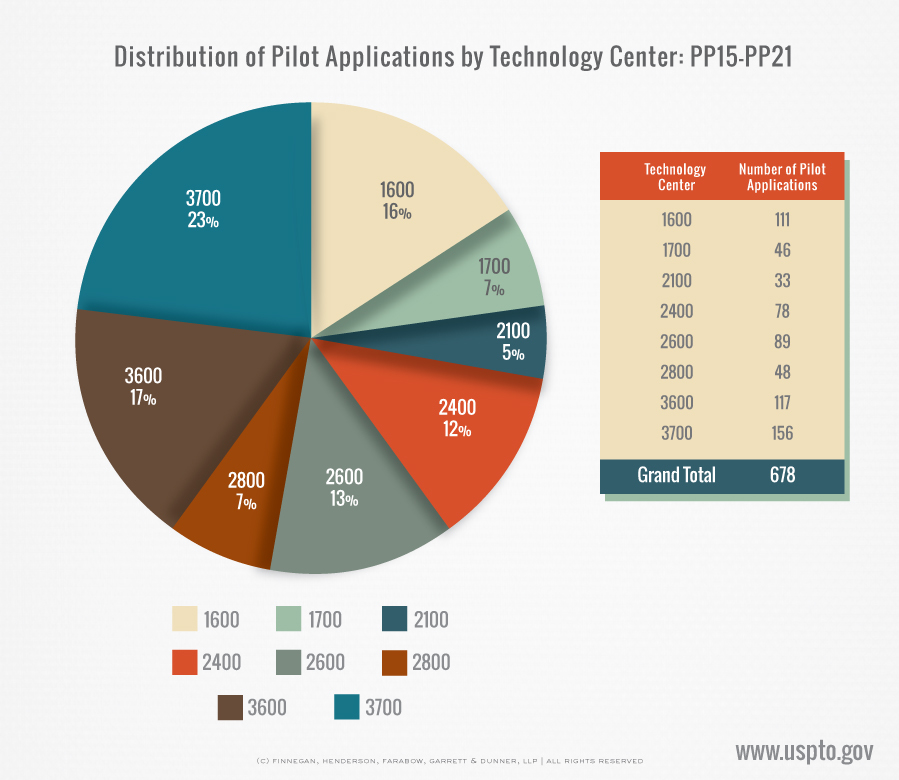
As of July 2016, 678 child applications have been identified as meeting the program criteria. Here is the breakdown by technology center.
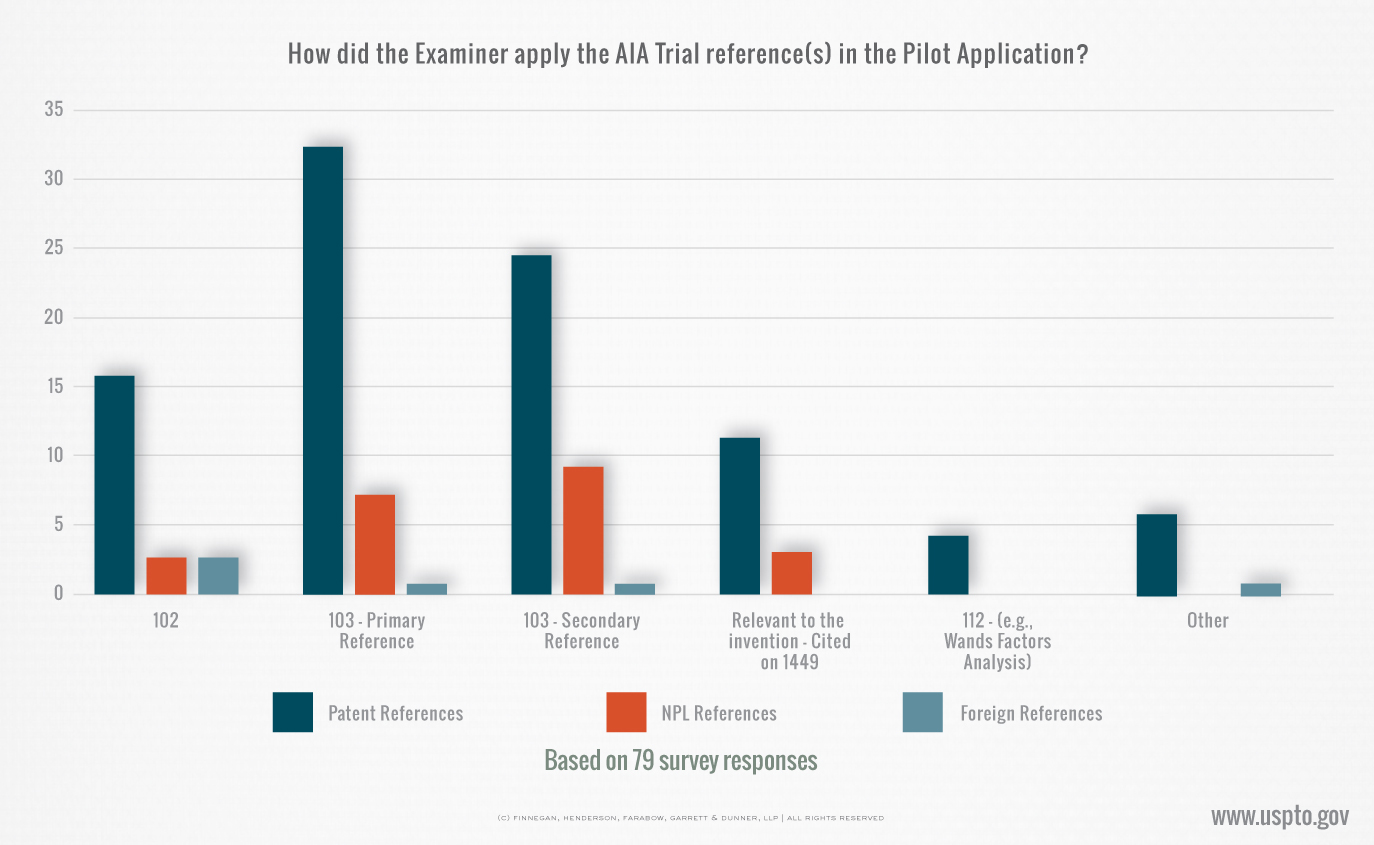
More than 200 PGO pilot program surveys have been completed by examiners who participated in the PGO pilot program. 45.8% of the examiners referred to one or more of the references cited in the post grant proceeding of the parent case in an office action mailed in the child. When an examiner did not use the cited references, it was because (1) the examiner was able to find better art than the cited references (40%), (2) the claims in the pilot case were substantially different from those of the parent case (32%), or (3) the examiner disagreed with the petitioner’s analysis of the prior art and/or claims (9%). A number of the examiners also indicated that they considered other documents submitted in the post grant proceeding, e.g., the petitioner’s analysis, the Board’s analysis, and expert declarations. For those examiners who used one or more references cited in the post grant proceeding, here is the breakdown of how those references were used.
Overall reactions from the examiners were positive in that they felt that the related post grant proceeding informed their understanding of the scope of the claims and the relevant art. The examiners also reported seeing the PGO program as successful in building a bridge between the PTAB and the examining corps. However, some examiners expressed practical concerns regarding the burden of considering the documents cited in the post grant proceeding in addition to any references cited by the applicant and any art uncovered in the search, leaving little time to consider the claimed invention itself.
As next steps following this four-month pilot, the USPTO plans to develop training and best practices based on the information learned from the PGO pilot program, which will be implemented across the examining corps.
Slides and other information from the August 18, 2016 PPAC meeting can be found here. More information about the PGO pilot program, including frequently asked questions about the program, can be found here.
Copyright © 2016 Finnegan, Henderson, Farabow, Garrett & Dunner, LLP.
DISCLAIMER: Although we wish to hear from you, information exchanged in this blog cannot and does not create an attorney-client relationship. Please do not post any information that you consider to be personal or confidential. If you wish for Finnegan, Henderson, Farabow, Garrett & Dunner, LLP to consider representing you, in order to establish an attorney-client relationship you must first enter a written representation agreement with Finnegan. Contact us for additional information. One of our lawyers will be happy to discuss the possibility of representation with you. Additional disclaimer information.


