
Use of Green and Yellow for Agricultural Equipment Infringes and Dilutes Deere’s Trade Dress Rights
November 14, 2017
Authored and Edited by Jonathan D. Uffelman; Naresh Kilaru; Julia Anne Matheson
Deere & Company has for more than 100 years sold a wide variety of agricultural, forestry, lawn, and garden equipment. Nearly all its agricultural equipment is painted green and yellow, and Deere owns several registered marks covering its green and yellow color scheme. FIMCO Inc. has an agricultural division that sells equipment also utilizing green and yellow. A comparison of the parties’ equipment is shown below, with Deere on the left and FIMCO on the right:
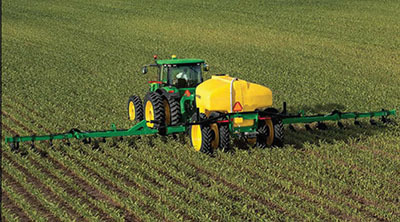
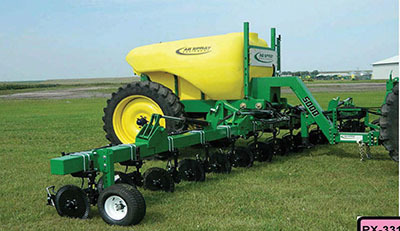
Deere filed suit to prevent FIMCO from using Deere’s registered green and yellow trade dress in connection with sprayers and wheeled agricultural equipment. Following a five-day bench trial, the Court concluded that FIMCO’s use of the green and yellow trade dress infringed and diluted Deere’s trademarks. The only likelihood-of-confusion factors that favored FIMCO were the high degree of customer care, and the fact that Deere’s green and yellow mark on trailed agricultural equipment was not as strong as Deere argued, due to multiple other companies using that color scheme over the years.
With respect to FIMCO’s intent, the evidence showed that FIMCO was aware of Deere’s color scheme when it began using green and yellow. Nonetheless, the court stated: “[K]nowledge of a trademark, alone, will not support a finding of intent to confuse if other circumstances show that the defendant believed there was no infringement.” Here, the Court found insufficient evidence that FIMCO selected the green and yellow colors with an intent to cause confusion. FIMCO’s CEO testified that the green and yellow color scheme was chosen not to confuse farmers or “ride on John Deere’s back,” but because “that’s what people were ordering.” He also testified that he learned of Deere’s trademark registrations for the color scheme only when FIMCO was served with the complaint. Accordingly, this factor was neutral.
On the question of dilution, however, the Court found that much of the same evidence strongly supported a finding that FIMCO’s use of green and yellow diluted Deere’s trade dress rights. Four of FIMCO’s witnesses testified that farmers want their trailed agricultural implements to match their tractors, and that all things being equal, a farmer with a John Deere tractor would prefer a green and yellow trailed sprayer or applicator. Further, FIMCO trailed equipment is often depicted in marketing materials as being pulled by John Deere tractors. Even FIMCO’s CEO referred to green and yellow as “the John Deere” colors at trial.
The case is Deere & Company v. FIMCO Inc., Case No. 5:15-cv-105-TBR (W.D. Ky. Oct. 13, 2017).
Related Practices
Contacts

- Jonathan D. Uffelman
- Domain Name Specialist / Attorney
- Washington, DC
- +1 202 408 4328

Copyright © 2017 Finnegan, Henderson, Farabow, Garrett & Dunner, LLP.
DISCLAIMER: Although we wish to hear from you, information exchanged in this blog cannot and does not create an attorney-client relationship. Please do not post any information that you consider to be personal or confidential. If you wish for Finnegan, Henderson, Farabow, Garrett & Dunner, LLP to consider representing you, in order to establish an attorney-client relationship you must first enter a written representation agreement with Finnegan. Contact us for additional information. One of our lawyers will be happy to discuss the possibility of representation with you. Additional disclaimer information.