
TTAB Refuses To Register Trademark, Despite Private Consent Agreement
March 10, 2016
Authored and Edited by Jonathan D. Uffelman; Naresh Kilaru; Julia Anne Matheson
On February 25, 2016, the TTAB affirmed a refusal to register the mark TIME TRAVELER BLONDE for “beer,” finding it too similar to the registered mark TIME TRAVELER for “beer, ale and lager,” despite the existence of a consent agreement between the two brewers.
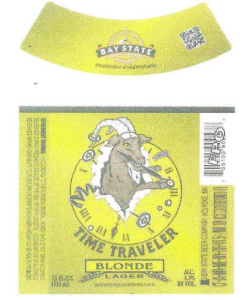
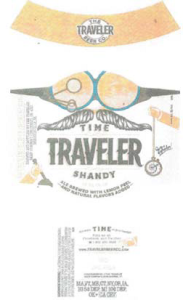
On appeal, the applicant, Bay State Brewing Company, Inc., conceded that the marks were similar and the goods were related. However, Bay State maintained that if both brewers adhered to the terms of a consent agreement they had entered into, “confusion is extremely unlikely.” Key provisions of the agreement included a “Geographical Limitation,” which provided that Bay State would not use its applied-for mark “outside of New England and the State of New York,” while the Registrant’s use would not be geographically limited. The “Restrictions on Use” provision stated that both parties must use their respective house marks in connection with the marks at issue. And the “Trade Dress” provision stated that the parties would refrain from using confusingly similar packaging, labeling, and/or marketing. The parties provided examples of their respective trade dresses:
The Board first found that the identified goods (beer), the trade channels (liquor stores, grocery and convenience stores, bars and restaurants), and classes of purchasers were all virtually identical, as were the two marks. According to the Board, the term BLONDE does little or nothing to distinguish the marks because it is a descriptive or generic term for a type of beer. These facts alone presented “a compelling case for finding a likelihood of confusion.”
Against this background, the Board found that the consent agreement was not sufficient to avoid the likelihood of consumer confusion. Moreover, it also posed significant problems with respect to providing adequate notice to the public of Bay State’s applied-for rights. For example, the Board found the “Geographical Limitation” provision caused at least two problems. First, it allowed both parties to use their respective marks in the same territories—New York and New England. Second, with respect to trademark registration, these geographical restrictions were not reflected in Bay State’s application. The Board stated: “The trademark register should reflect...the realities of the marketplace.” Though the agreement limited Bay State’s use, Bay State would nevertheless own a nationwide registration, which would give Bay State presumptive nationwide exclusive rights to which it was not entitled.
The Board found that the other provisions were even less effective. The use of house marks did not alleviate confusion because the marks were virtually identical and the goods were the same. The “Trade Dress” provision was inadequate because, while it prohibited each party from using the other’s trade dress, it did not require the use of any particular trade dress by either party. In theory, the parties could use minimal trade dress and display their house marks in small font to comply with the letter of the agreement, but confusion would not be avoided. Moreover, the fact that Bay State’s application was based on intent to use compounded the problems. The Board stated:
[Bay State] essentially is asking the Board to make a likelihood of confusion determination based upon its mark (with use of its house mark and trade dress as shown in the examples) that not only is not being registered, but is not even in use yet as reflected by its Section 1(b) application, and which Applicant will not be required to use. That is to say, Applicant desires a decision based on its mark, not as applied for, but rather as promised.
Allowing a registration on the basis of such a promise “would result in a failure of the public notice function of registrations.”
While the Board recognized “the importance of consent agreements entered into by business people and the significant role that they can play in determining likelihood of confusion issues,” it found that this particular agreement was not properly designed to avoid confusion.
The case is In re Bay State Brewing Co., Inc., Serial N. 85826258 (TTAB Feb. 24, 2016).
Related Practices
Related Industries
Contacts

- Jonathan D. Uffelman
- Domain Name Specialist / Attorney
- Washington, DC
- +1 202 408 4328

Copyright © 2016 Finnegan, Henderson, Farabow, Garrett & Dunner, LLP.
DISCLAIMER: Although we wish to hear from you, information exchanged in this blog cannot and does not create an attorney-client relationship. Please do not post any information that you consider to be personal or confidential. If you wish for Finnegan, Henderson, Farabow, Garrett & Dunner, LLP to consider representing you, in order to establish an attorney-client relationship you must first enter a written representation agreement with Finnegan. Contact us for additional information. One of our lawyers will be happy to discuss the possibility of representation with you. Additional disclaimer information.