
TTAB Clarifies When a Dilution Claimant’s Mark Must Have Become Famous When Opposing Use-Based Applications
April 11, 2016
Authored and Edited by Jonathan D. Uffelman; Naresh Kilaru; Julia Anne Matheson
On March 31, 2016, the TTAB issued a precedential decision clarifying when a dilution claimant’s mark must have become famous when opposing use-based applications.
The fraternity owned several U.S. registrations for its “Alpha Phi Omega” name and the Greek letters “ΑΦΩ.” In 2010, it applied to register its “ΑΦΩ” mark for “headwear; jackets; shirts; [and] sweatshirts” on the basis of use, stating a first use date of 1980.
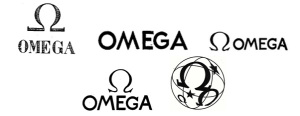
Omega owned several OMEGA marks (shown below) for various goods and services, including, watches, clothes (namely, scarves and neckties), and retail store services featuring watches and jewelry:
Omega opposed the fraternity’s application on grounds of likelihood of confusion and likelihood of dilution by blurring. The Board denied the fraternity’s motion for summary judgment finding there were genuine issues of material fact with respect to both claims.
Because the fraternity’s application for “ΑΦΩ” was based on use, to prevail on its dilution-by-blurring claim Omega was required to prove that its OMEGA marks became famous prior to the fraternity’s first use of “ΑΦΩ.” The question was whether Omega should be required to prove fame before (1) the fraternity’s first use of “ΑΦΩ” for the goods in the application, or (2) the fraternity’s first use of “ΑΦΩ” for any goods or services (which the fraternity argued date back to 1925). After requiring the parties to submit supplemental briefing on this issue, the Board held that a plaintiff must establish that its mark became famous prior to any established, continuous use of the defendant’s mark as a trademark or trade name, and not merely prior to the defendant’s use in connection with the specific goods or services set forth in a defendant’s application or registration.
The Board based its conclusion on the statutory language and supporting case law. Section 43(c) of the Lanham Act states that the owner of a famous mark is entitled to an injunction against another “who at any time after the owner’s mark has become famous, commences use of a mark or trade name in commerce that is likely to cause dilution by blurring... .” Significantly, unlike other sections of the Lanham Act, this language does not specify that the defendant’s use of the mark must be in connection with the goods or services set forth in the defendant’s application or registration. The Board found that this statutory construction was consistent with case law from the Ninth, Fourth, and Federal Circuits.
Because Omega made no allegations regarding the date its OMEGA marks became famous, the Board granted Omega twenty days to amend its notice of opposition. Also, because there was a factual dispute as to when the fraternity first used “ΑΦΩ” as a mark or trade name, if the fraternity failed to establish its first use in commerce, the Board found Omega would only need to prove fame prior to the fraternity’s January 5, 2010 application filing date. On the other hand, to the extent the fraternity established that it first used its “ΑΦΩ” mark in 1925, Omega would be required to prove fame prior to 1925 -- a showing that, while possible, would present significant evidentiary challenges.
The case is Omega SA v. Alpha Phi Omega, Opposition Nos. 91197504 and 91197505 (Mar. 31, 2016).
Related Practices
Contacts

- Jonathan D. Uffelman
- Domain Name Specialist / Attorney
- Washington, DC
- +1 202 408 4328

Copyright © 2016 Finnegan, Henderson, Farabow, Garrett & Dunner, LLP.
DISCLAIMER: Although we wish to hear from you, information exchanged in this blog cannot and does not create an attorney-client relationship. Please do not post any information that you consider to be personal or confidential. If you wish for Finnegan, Henderson, Farabow, Garrett & Dunner, LLP to consider representing you, in order to establish an attorney-client relationship you must first enter a written representation agreement with Finnegan. Contact us for additional information. One of our lawyers will be happy to discuss the possibility of representation with you. Additional disclaimer information.