
Trademark Infringement Suit Against Kanye West Precluded by the First Amendment
October 06, 2016
Authored and Edited by Jonathan D. Uffelman; Naresh Kilaru; Julia Anne Matheson
The U.S. District Court for the Southern District of New York recently dismissed a trademark infringement complaint against Kanye West on the ground the claims were precluded by the First Amendment.
In 2008, plaintiff Michael Medina created a two-person Latin band called “Loisaidas.” The band’s name originated from the fact that Medina and his bandmate were from Manhattan’s Lower East Side, and “Loisaidas” is the Spanish slang for “lower east siders.” Medina obtained trademark registrations for LOISAIDAS covering a variety of goods related to music audio recordings and music videos.
In 2015, Kanye West and co-defendant Damon Dash created eight episodic short films containing various musical elements about a violent turf war for control of the Lower East Side’s drug business. The films were collectively titled “Loisaidas” and used the logo below, which shows the word “Loisaidas” stylized as a skyline, above a handgun:
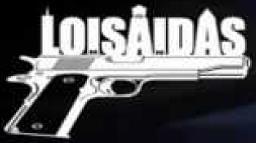
In the films, the term “Loisaidas” is spoken or appears a handful of times and, in context, is almost always used as the name of a place. Medina filed suit in April 2015 alleging trademark infringement.
Citing the First Amendment, the Court dismissed Mr. Medina’s claims. As an initial matter, the Court rejected Mr. Medina’s argument that the defendants used “Loisaidas” to refer to a musical group. The films never displayed any musical group performing and featured music from a variety of different artists, rather than a single group.
Because “Loisaidas” was the title of the accused work, the Court went on to analyze (1) whether the title had any artistic relevance to the work and (2) whether the title was explicitly misleading. On the first issue, the Court found that the title was artistically relevant because: (1) the films were about drug dealers seeking to acquire control of the drug trade in Manhattan’s Lower East Side; (2) “Loisaidas” is the Spanish slang term for “lower east siders”; and (3) the scenes were identifiably set in the Lower East Side.
On the second issue, the Court found that the title was not explicitly misleading because, among other things, the defendants never suggested that Mr. Medina produced the work. To the contrary, promotional materials prominently indicated that the films were produced by the defendants.
In sum, the Court ruled, “Plaintiff is entitled to protect his duo’s trademark, but not by staking his claim to a pre-existing term and then attempting to remove all expressive, non-explicitly-misleading uses from public circulation.”
The case is Medina v. Dash Films, Inc., Case No. 15-cv-2551 (S.D.N.Y.).
Related Practices
Contacts

- Jonathan D. Uffelman
- Domain Name Specialist / Attorney
- Washington, DC
- +1 202 408 4328

Copyright © 2016 Finnegan, Henderson, Farabow, Garrett & Dunner, LLP.
DISCLAIMER: Although we wish to hear from you, information exchanged in this blog cannot and does not create an attorney-client relationship. Please do not post any information that you consider to be personal or confidential. If you wish for Finnegan, Henderson, Farabow, Garrett & Dunner, LLP to consider representing you, in order to establish an attorney-client relationship you must first enter a written representation agreement with Finnegan. Contact us for additional information. One of our lawyers will be happy to discuss the possibility of representation with you. Additional disclaimer information.
