
Jury Finds Coca Cola’s Pomegranate Beverage Did Not Mislead Consumers
March 25, 2016
Authored and Edited by Jonathan D. Uffelman; Naresh Kilaru; Julia Anne Matheson
On March 21, 2016, a California jury ended POM Wonderful’s long-running $77 million Lanham Act suit against The Coca Cola Company, finding Coca Cola did not falsely advertise its Minute Maid pomegranate juice.
In 2008, POM filed suit against Coca Cola claiming that Coca Cola unfairly capitalized on POM’s research on the health benefits of pomegranate juice and engaged in false advertising in the marketing of Coca Cola’s Minute Maid pomegranate juice. In particular, POM alleged that Coca Cola falsely represented to consumers that the primary ingredients in Minute Maid were pomegranate and blueberry juice when, in reality, the product was more than 99% apple and grape juice. In particular, POM argued that the Minute Maid packaging was misleading because it displayed the words “Pomegranate Blueberry” in larger, more prominent font than “Flavored Blend Of Five Juices,” and also emphasized the depiction of a pomegranate in the label’s representation of five fruits. Further contributing to the consumer deception, according to POM, was the fact that Coca Cola allegedly colored its drink to look like pomegranate juice.
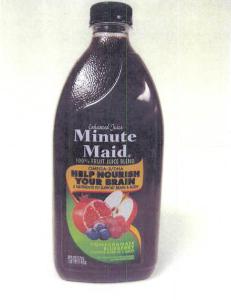
For purposes of establishing damages, POM asserted that three months after Coca Cola released its pomegranate juice, POM saw its product knocked out of the number-one pomegranate beverage slot, and after Coca Cola’s product was taken off the market, POM’s sales increased again.
At trial, Coca Cola focused on three themes. First, it argued that its pomegranate juice was clearly and properly labeled as a “flavored blend” in compliance with FDA requirements. According to Coca Cola, consumers understand that, like other products, its pomegranate juice has a taste that isn’t necessarily produced by a dominant ingredient.
Second, Coca Cola argued that POM could not have been harmed because the two products appealed to different consumers. For example, POM’s product is four times more expensive than Coca Cola’s product, is sold in the produce section with “Goji and acai berry” juices, and, according to Coca Cola, caters to wealthy “health-conscious hypochondriacs.” In contrast, Coca Cola’s product was sold in the mainstream orange juice section and catered to families.
Third, Coca Cola argued that POM’s claims were barred by unclean hands. Coca Cola presented evidence that back in 2012, a federal administrative judge ruled that POM had made unsubstantiated health benefit claims about its own juice, including that it could reduce the risk of heart disease, prostate cancer, and erectile dysfunction. Coca Cola argued that “[h]aving created a market by making unsubstantiated health claims, Pom cannot now complain that [Coca Cola] captured a part of that market.” Further, POM sold a pomegranate blackberry tea that was prominently labeled as “pomegranate,” but which contained only 1% pomegranate juice.
The jury took less than a day to conclude that Coca Cola’s packaging would not mislead customers. In view of that finding, the jury did not address Coca Cola’s unclean-hands defense.
The case is POM Wonderful LLC v. The Coca Cola Co., Case No. 2:08-cv-06237 (C.D. Cal.).
Related Practices
Contacts

- Jonathan D. Uffelman
- Domain Name Specialist / Attorney
- Washington, DC
- +1 202 408 4328

Copyright © 2016 Finnegan, Henderson, Farabow, Garrett & Dunner, LLP.
DISCLAIMER: Although we wish to hear from you, information exchanged in this blog cannot and does not create an attorney-client relationship. Please do not post any information that you consider to be personal or confidential. If you wish for Finnegan, Henderson, Farabow, Garrett & Dunner, LLP to consider representing you, in order to establish an attorney-client relationship you must first enter a written representation agreement with Finnegan. Contact us for additional information. One of our lawyers will be happy to discuss the possibility of representation with you. Additional disclaimer information.