
Federal Circuit Faults Board for Not Giving Sufficient Weight to Third-Party Registrations and Clarifies Standard for Abandonment When Changes Are Made to a Mark
September 01, 2015
Authored and Edited by Jonathan D. Uffelman; Naresh Kilaru; Julia Anne Matheson
On August 19, 2015, the Federal Circuit once again faulted the Board for not giving sufficient weight to third-party registrations when assessing a mark’s strength, citing its recent decision in Juice Generation, Inc. v. GS Enters. LLC, No. 14-1853, 2015 WL 4400033 (Fed. Cir. July 20, 2015). The Board also clarified the standard for determining when changes to a mark result in abandonment of an earlier registered mark.
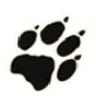
The applicant Jack Wolfskin (“Wolfskin”) applied to register the paw print design shown below:
New Millennium opposed Wolfskin’s application, asserting Wolfskin’s mark would likely cause confusion with its registered KELME & Design mark:
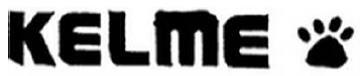
Wolfskin counterclaimed to cancel New Millenium’s registration on abandonment grounds, arguing that New Millennium no longer used the registered version of its mark because it had adopted the modified version shown below:

The Board found a likelihood of confusion and rejected the abandonment counterclaim. The Federal Circuit reversed the finding of likelihood of confusion and affirmed the dismissal of the counterclaim.
Regarding likelihood of confusion, the Federal Circuit found that the Board’s conclusion lacked substantial evidence on the critical issue of similarity and that the Board failed to give sufficient weight to the number and nature of similar marks in use. In particular, the Federal Circuit found that it was erroneous for the Board to place such heavy emphasis on a common design element such as a paw print, especially when considering the voluminous evidence of third-party paw print designs registered in connection with clothing. Citing its recent Juice Generation decision, the Federal Circuit found that Wolfskin’s evidence of third-party registrations and use was powerful on its face, and showed that consumers are conditioned to look for differences between paw print designs. Therefore, the presence of the KELME word mark was sufficient to avoid a likelihood of confusion.
With respect to the abandonment counterclaim, the Federal Circuit held that a trademark owner may avoid abandonment of the original mark if the modified version creates “the same, continuous commercial impression.” This is the same standard that applies in priority and tacking disputes. Based on this standard, the Federal Circuit agreed with the Board that New Millenium’s original and modified versions of its mark constituted the same commercial impression. It therefore affirmed the dismissal of the abandonment counterclaim.
The case is Jack Wolfskin Ausrustung Fur Draussen GmbH & Co. KGAA v. New Millennium Sports, S.L.U., Case No. 2014-1789 (Fed. Cir. Aug. 19, 2015).
Tags
abandonment, United States Court of Appeals for the Federal Circuit (CAFC), likelihood of confusion, priority, Trademark Trial and Appeal Board (TTAB)
Contacts

- Jonathan D. Uffelman
- Domain Name Specialist / Attorney
- Washington, DC
- +1 202 408 4328

Copyright © 2015 Finnegan, Henderson, Farabow, Garrett & Dunner, LLP.
DISCLAIMER: Although we wish to hear from you, information exchanged in this blog cannot and does not create an attorney-client relationship. Please do not post any information that you consider to be personal or confidential. If you wish for Finnegan, Henderson, Farabow, Garrett & Dunner, LLP to consider representing you, in order to establish an attorney-client relationship you must first enter a written representation agreement with Finnegan. Contact us for additional information. One of our lawyers will be happy to discuss the possibility of representation with you. Additional disclaimer information.