
Court Says Trademark Litigant Must Produce Documents Held By Foreign Subsidiary
November 3, 2017
Authored and Edited by Jonathan D. Uffelman; Naresh Kilaru; Julia Anne Matheson
Republic Technologies (NA), LLC owns the trademark OCB for roll-your-own cigarette paper. HBI International sells competing cigarette paper under the trademark RAW. In March 2016, Republic filed a declaratory judgment action against HBI seeking a ruling that its “Organic Hemp” OCB packaging did not infringe HBI’s trade dress rights in its RAW packaging.

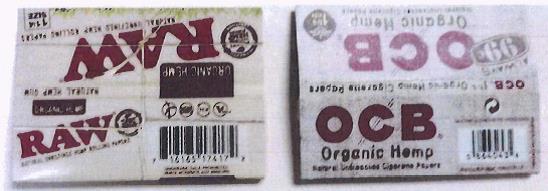
In discovery, Republic stated in an interrogatory that the design of its allegedly infringing packaging was not based on HBI’s products, but rather was “derived from the packaging independently created for OCB organic hemp cigarette papers already being sold in Europe,” which were “the origin and conceptual basis for the OCB organic hemp cigarette paper packaging, advertising and signage at issue.” When HBI sought production of documents from Republic’s French subsidiary related to the design of the OCB packaging, Republic refused, arguing the documents were not in its possession, custody, or control, and that French law prohibited production. HBI moved to compel.
The Court concluded that Republic could be compelled to produce documents located in France if they were relevant and within Republic’s control, namely, whether Republic had a legal right to obtain the documents. The Court concluded that Republic had such a legal right because: (1) Republic’s general counsel testified in a deposition that the French subsidiary was 100% owned by Republic; (2) Republic controlled the licensing of the OCB trademark to its French subsidiary; (3) the French subsidiary and Republic shared common owners; and (4) Republic had repeatedly offered to “work with [the French subsidiary] to obtain the information,” which suggested it had a legal right to obtain that discovery irrespective of the French subsidiary’s wishes. Further, the documents were “unquestionably relevant” to both parties’ claims.
Republic argued that to show control, HBI had to show that Republic and its French subsidiary had interlocking management structures, that Republic controlled the French officers, or that Republic maintained the documents in the ordinary course of business. Republic’s argument, however, was based on a case that addressed whether a subsidiary could be compelled to produce documents held by its parent. As the Court stated: “the question of whether a subsidiary exercises sufficient control over a parent is a very different question from whether the parent exercises sufficient control over its subsidiary.”
Finally, due to the potential conflict with French law, the Court analyzed factors related to international comity and found they weighed in favor of production. For example, Republic did not maintain that the information HBI sought could be obtained from any other source. The Court also found France’s interest in prohibiting production was outweighed by the interest U.S. courts have in providing a forum for the final resolution of disputes and for enforcing its judgments. According to the Court, the French blocking statute “was originally created to block United States antitrust laws and [] has not been strictly enforced in France.” Moreover, France’s interest in protecting its corporations from foreign discovery has diminished weight when the French corporation is a subsidiary of a U.S. company. “Republic cannot invoke the alleged foreign lineage of its cigarette paper packaging, advertising and signage as evidence of non-infringement on the one hand, and on the other hand, assert the foreign country’s blocking statute as a bar to producing documents in its control that would prove -- or disprove -- Republic’s assertions.”
The Court did, however, limit production to those documents that were used in, or which revealed the design process for, the version of the OCB Organic Hemp products that Republic markets and sells in the United States.
The case is Republic Techs. (NA), LLC v. BBK Tobacco & Foods, LLP, Case No. 16 C 3401 (N.D. Ill.).
Related Practices
Contacts

- Jonathan D. Uffelman
- Domain Name Specialist / Attorney
- Washington, DC
- +1 202 408 4328

Copyright © 2017 Finnegan, Henderson, Farabow, Garrett & Dunner, LLP.
DISCLAIMER: Although we wish to hear from you, information exchanged in this blog cannot and does not create an attorney-client relationship. Please do not post any information that you consider to be personal or confidential. If you wish for Finnegan, Henderson, Farabow, Garrett & Dunner, LLP to consider representing you, in order to establish an attorney-client relationship you must first enter a written representation agreement with Finnegan. Contact us for additional information. One of our lawyers will be happy to discuss the possibility of representation with you. Additional disclaimer information.