
Key Insights from the PTAB’s Updated Orange Book and Biologic Patent Study
August 30, 2021
IP Watchdog
By Kassandra M. Officer; Andrew E. Renison; Jill K. MacAlpine, Ph.D.
“Institution rates for Orange Book patents and biologic patents are slightly lower than overall institution rates, with biologic patents faring better than Orange Book patents at institution.”
The U.S. Patent and Trademark Office Patent Trial and Appeal Board (PTAB) recently released an update to its Orange Book patent and biologic patent study, examining post-grant petitions filed against Orange Book patents and biologic patents between September 16, 2012, and June 30, 2021. The PTAB classified a petition as challenging an Orange Book-listed patent by comparing the petition’s filing date with data from the U.S. Food and Drug Administration’s (FDA’s) electronic Orange Book indicating when the patent was listed. The PTAB manually identified biologic patents as any patent potentially covering a Purple Book-listed product and any non-Orange Book-listed patent directed to treating a disease or condition.
Identifying Trends
The study reveals that 4% and 2% of all post-grant petitions are filed against Orange Book patents and biologic patents, respectively. And while the number of petitions filed against Orange Book patents and biologic patents has decreased over time, that trend is more pronounced for Orange Book patents than for biologic patents. Indeed, the study shows that for Orange Book patents, only five petitions have been filed in 2021 as compared to 20 petitions filed in 2020 and 133 petitions (7.0%) filed at peak in 2015. But for biologic patents, 23 petitions have been filed in 2021 as compared to eight petitions filed in 2020 and 75 (3.9%) filed at peak in 2017.
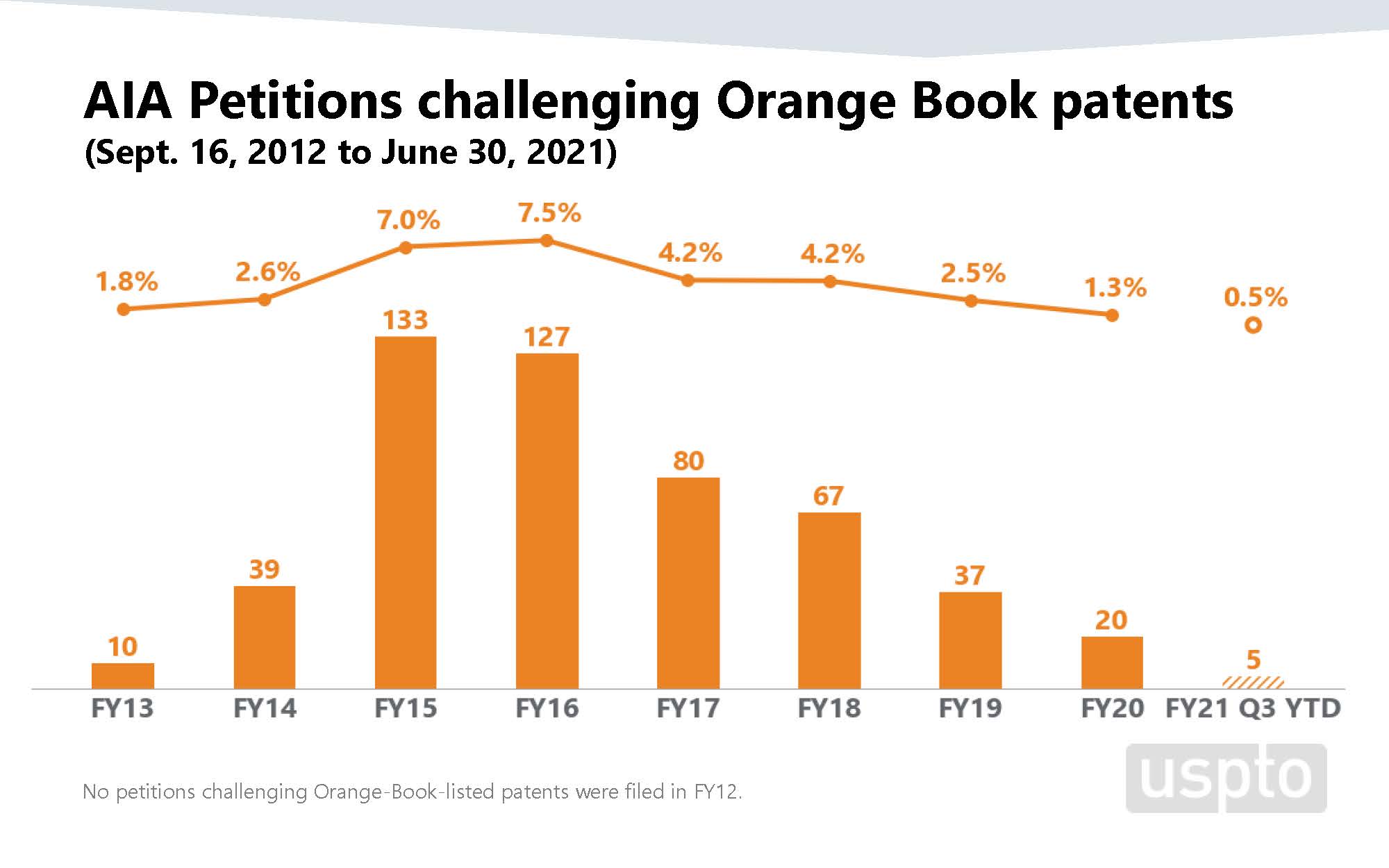
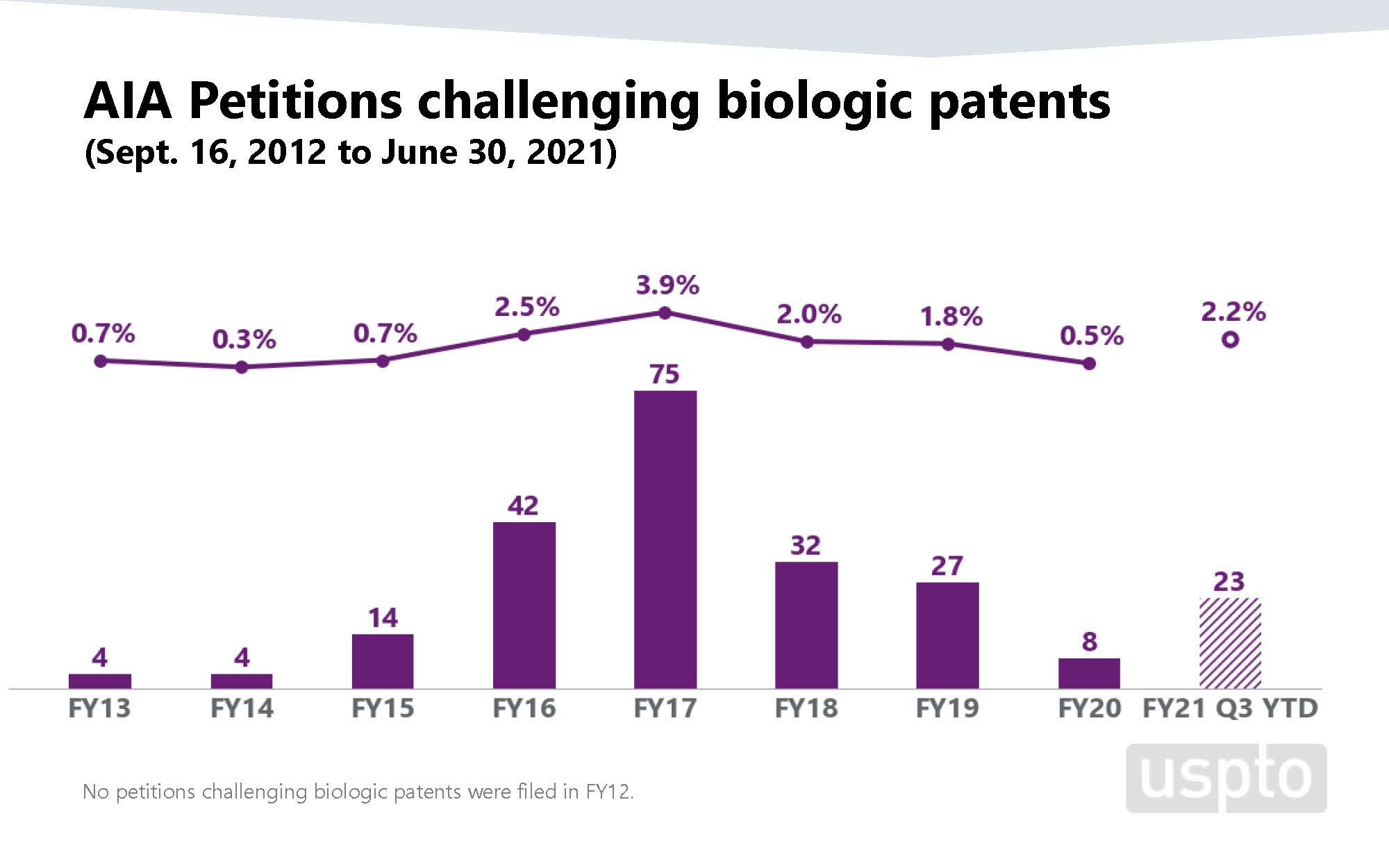
Institution rates for Orange Book patents and biologic patents are slightly lower than overall institution rates, with biologic patents faring better than Orange Book patents at institution. In particular, 64% of all post-grant petitions are instituted whereas 62% and 55% of post-grant petitions filed against Orange Book patents and biologic patents, respectively, are instituted. Once instituted, however, Orange Book patents fare better than biologic patents. Only 15% of petitions filed against Orange Book patents resulted in a final written decision holding all challenged claims unpatentable whereas 21% of petitions filed against biologic patents resulted in a final written decision holding all challenged claims unpatentable.
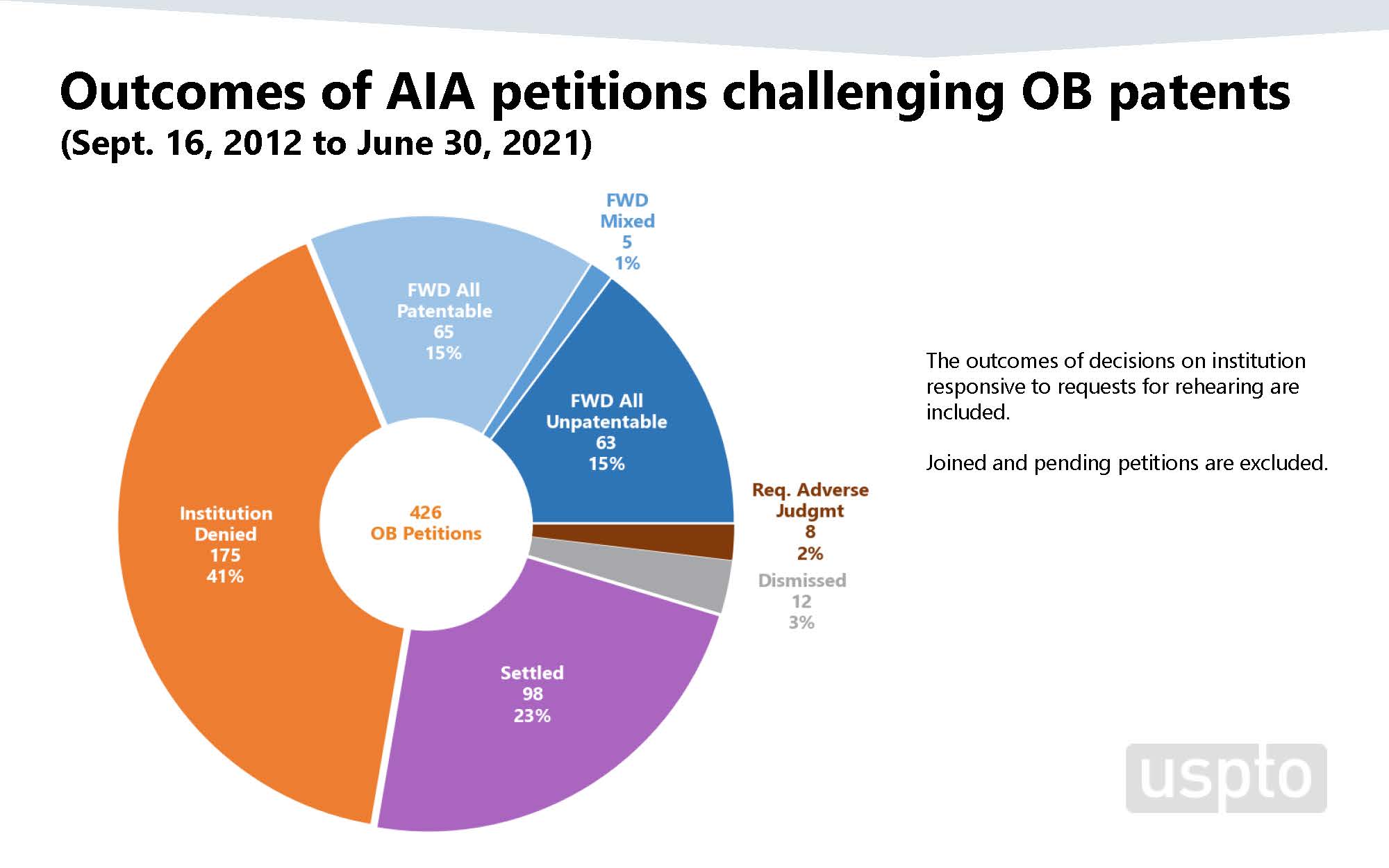
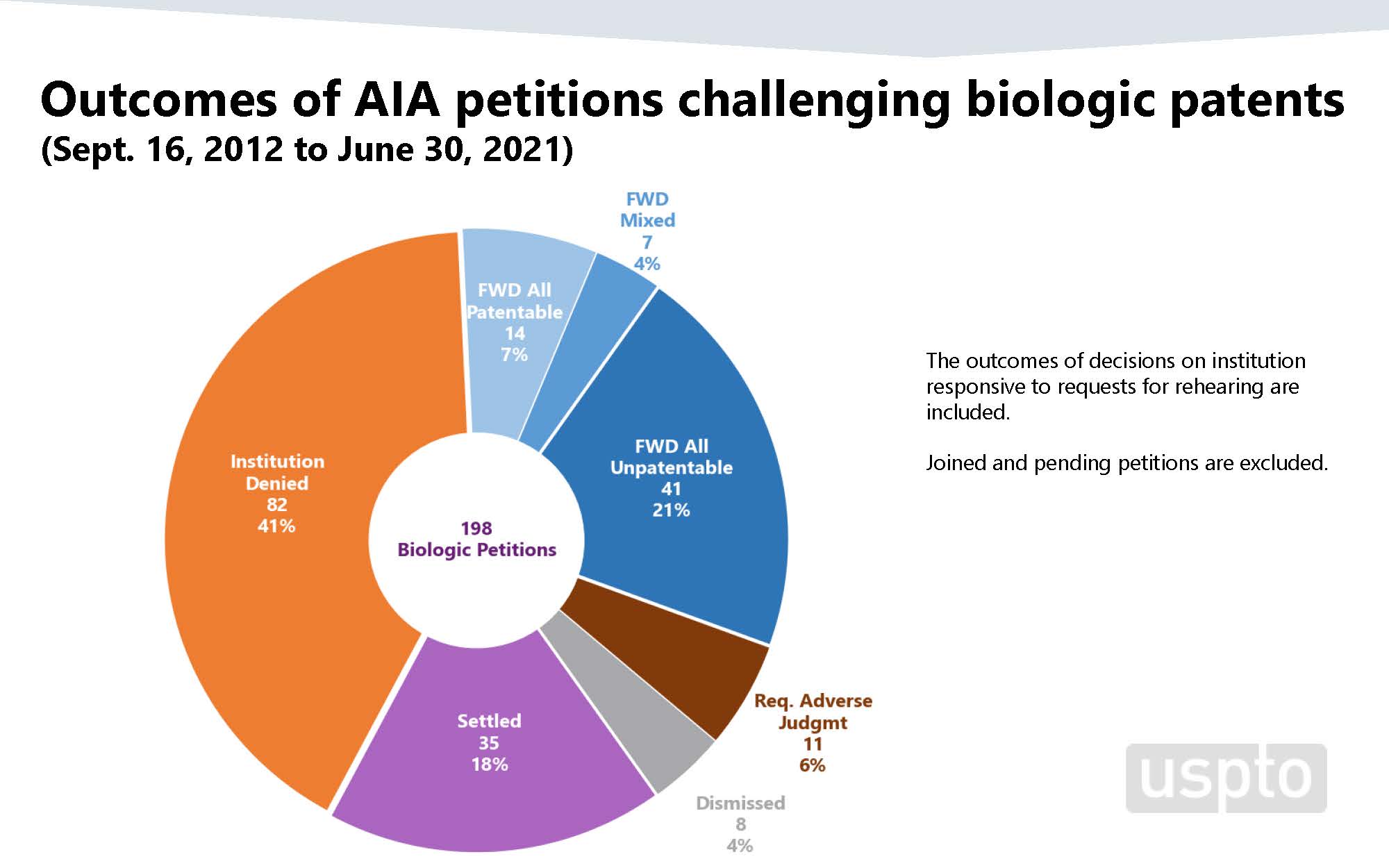
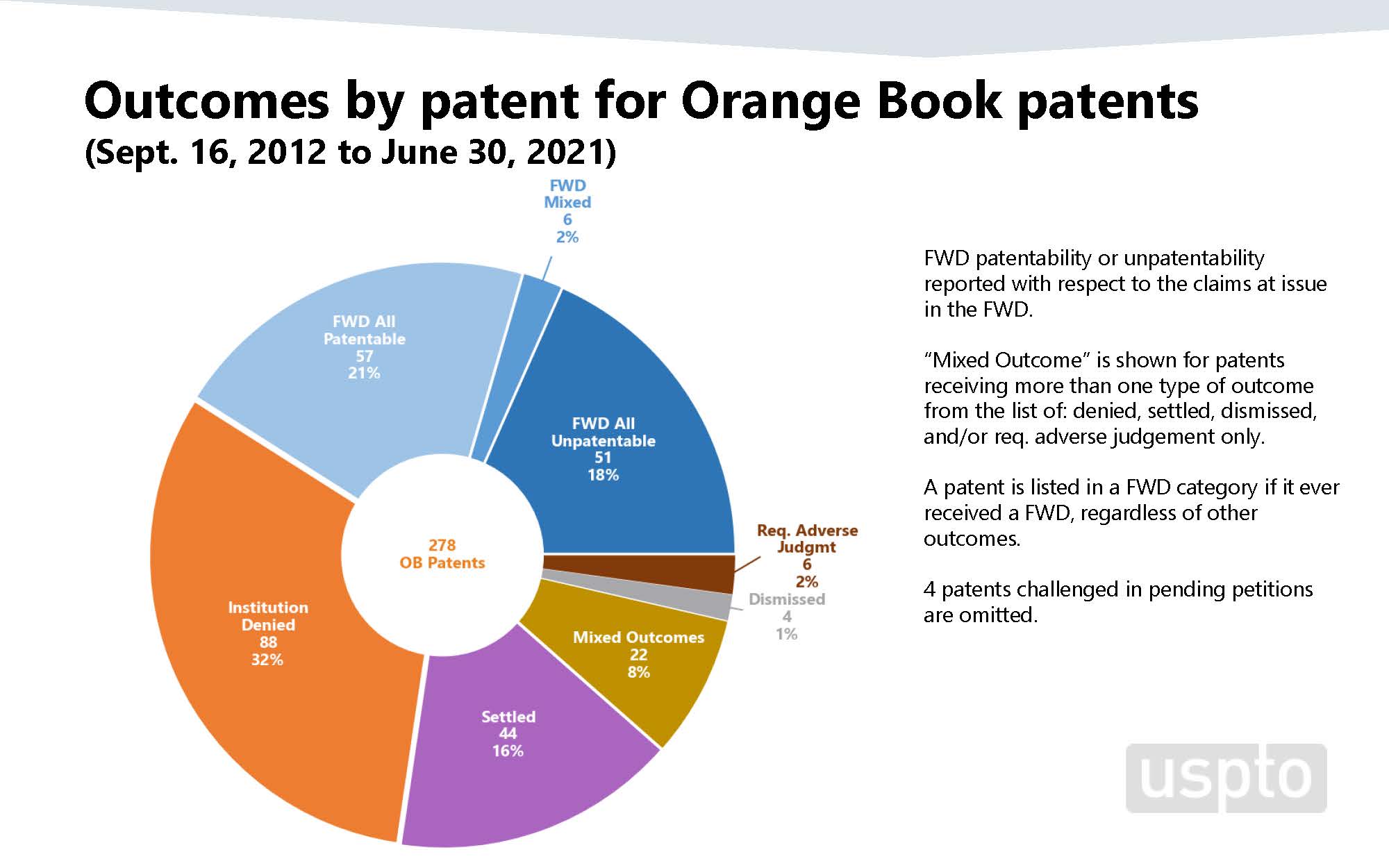
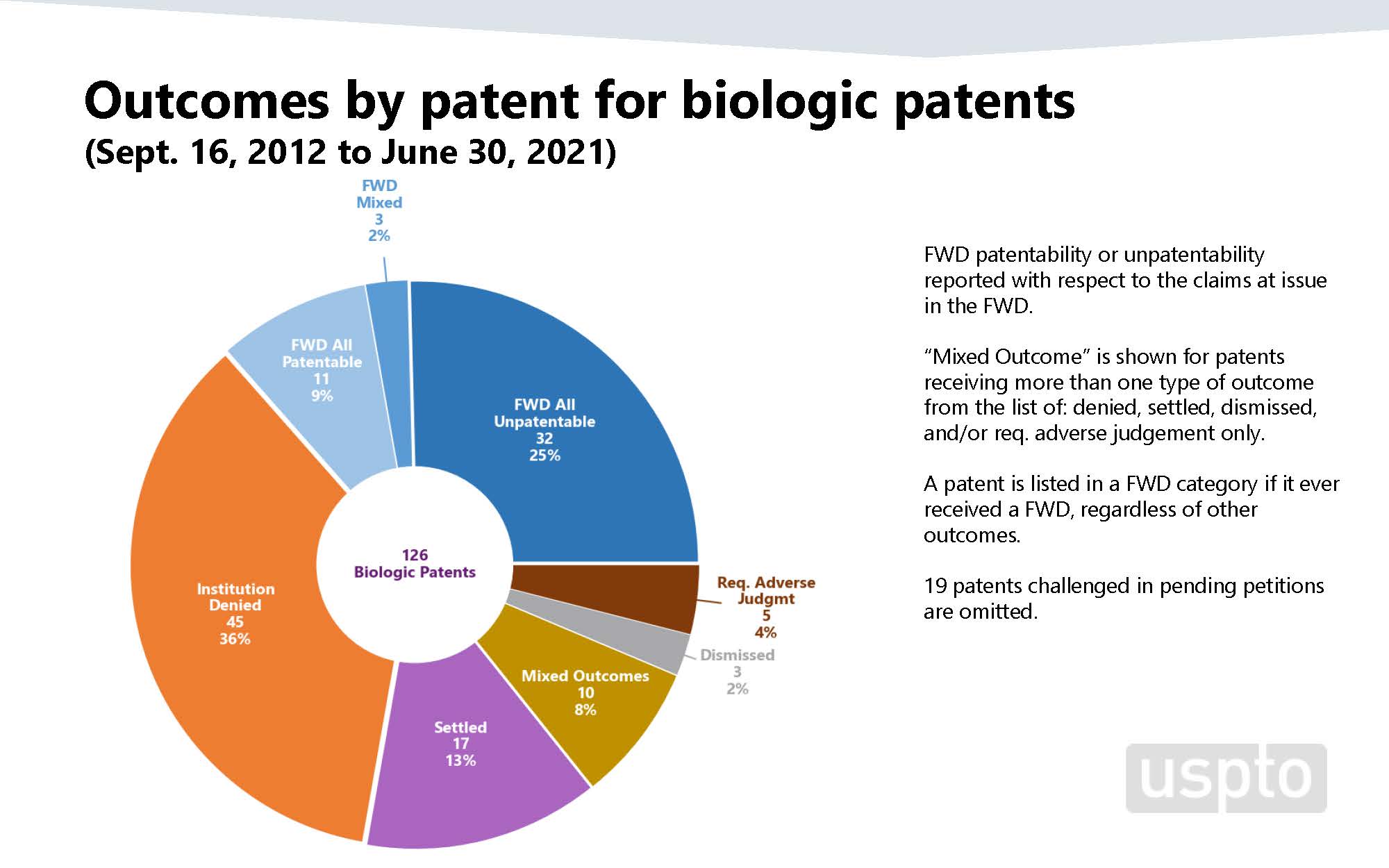
This trend was maintained when outcomes were analyzed by patent, with only 18% of challenged Orange Book patents resulting in a final written decision holding all challenged claims unpatentable and 25% of challenged biologic patents resulting in a final written decision holding all challenged claims unpatentable.
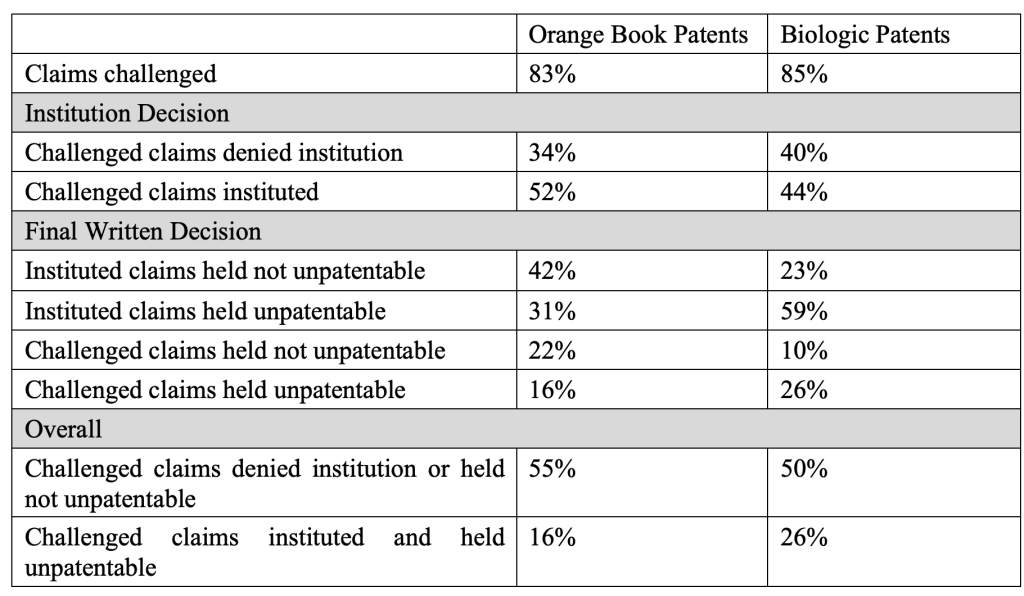
The study’s assessment of claim outcomes also provides helpful insight. As shown in the table below, roughly equal percentages of Orange Book and biologic patent claims are challenged, despite 6,188 claims in Orange Book patents and 2,228 claims in biologic patents. But 52% of challenged Orange Book patent claims are instituted whereas only 44% of challenged biologic patent claims are instituted. Of the instituted claims, however, only 31% of Orange Book patent claims are held unpatentable whereas 59% of biologic patent claims are held unpatentable. Overall, when challenged, 55% of Orange Book patent claims and 50% of biologic patent claims are denied institution or held not unpatentable.
Takeaways
The study provides petitioners and patent owners alike with key insights for Orange Book and biologic patents. In general, challenges to these patents have decreased over time. While institution rates for petitions challenging Orange Book and biologic patents are lower than overall institution rates, the gap is narrowing, especially for Orange Book patents. Biologic patent owners, however, continue to have an advantage at institution. It is thus critical that biologic patent owners capitalize on this advantage, as biologic patent claims face high rates of cancellation following institution. Biologic patent owners should meticulously review petitions and identify fatal shortcomings in their preliminary responses. Although petitions challenging Orange Book patents are more likely to be instituted, petitioners should be cognizant of the relatively lower rates of cancellation following institution. Petitioners of Orange Book patents should ensure their petitions are well drafted and thorough. Additionally, while the study did not distinguish among the types of claims challenged (e.g., method of treatment claims, formulation claims, compound claims), additional insight may be gleaned from such analysis, including which types of claims are more frequently challenged and cancelled.
Related Practices
Related Industries
Related Offices
Related Professionals

Originally printed in IP Watchdog on August 30, 2021. This article is for informational purposes, is not intended to constitute legal advice, and may be considered advertising under applicable state laws. This article is only the opinion of the authors and is not attributable to Finnegan, Henderson, Farabow, Garrett & Dunner, LLP, or the firm’s clients.